



Modern CNC machining demands speed, precision, and repeatability that traditional manual workholding simply cannot deliver. As manufacturing environments push toward full automation and higher throughput, the need for advanced clamping solutions becomes critical. Air vises represent a revolutionary approach to workholding, combining pneumatic power with precision engineering to transform how parts are secured during machining operations.
These sophisticated devices leverage compressed air to deliver consistent clamping force while eliminating the variability and time consumption associated with manual vise operation. Whether you’re running high-volume production or precision prototyping, understanding the capabilities and applications of air vises can significantly impact your shop’s productivity and part quality.
What Are Air Vises and How Do They Work
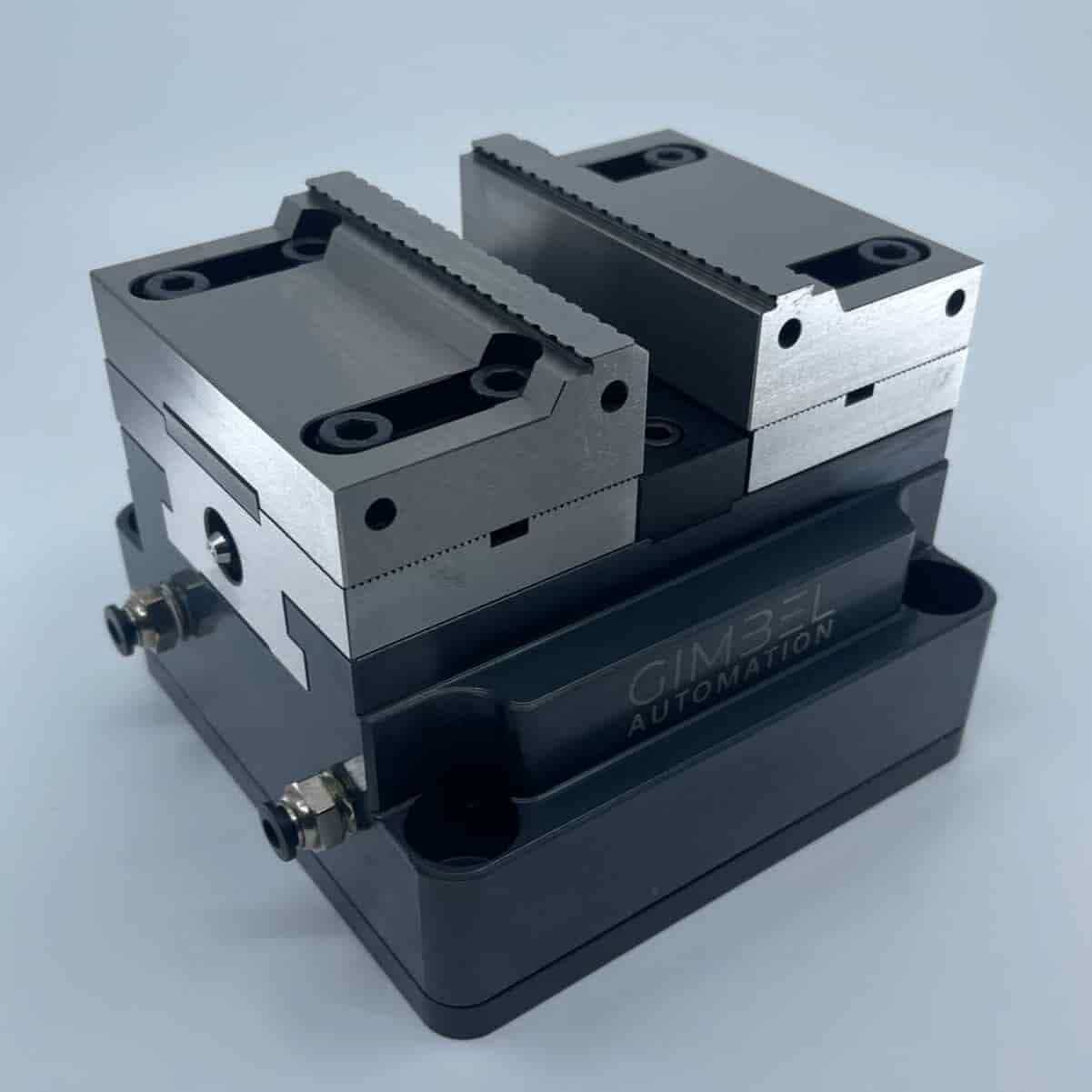
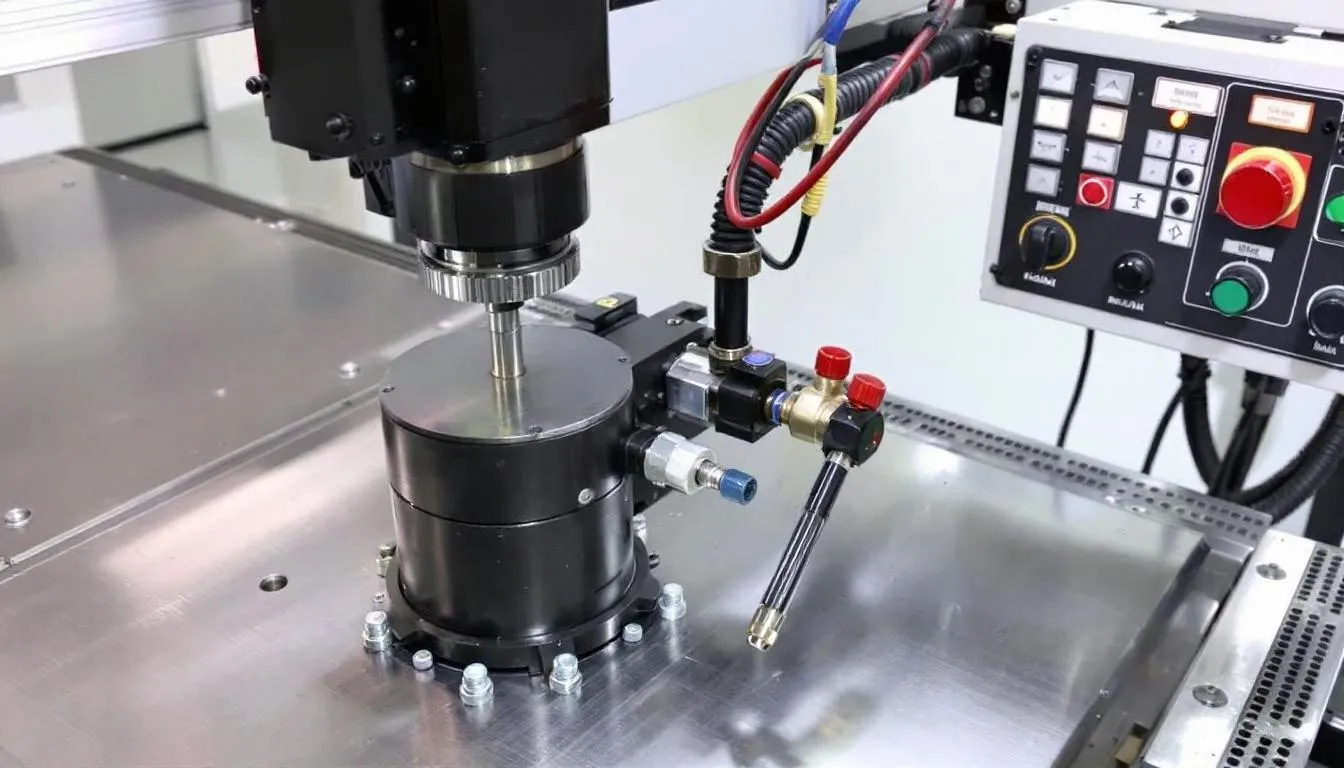
An air vise, also known as a pneumatic vise, represents a fundamental advancement in CNC workholding technology. These devices use compressed air to actuate clamping mechanisms, replacing the manual force and time required by traditional screw-driven vises. Pneumatic vises are also referred to as CNC Pneumatic Vises, Air Vises, or Precision Pneumatic Self Centering Vises. The core principle involves directing pressurized air through pneumatic cylinders that drive jaw movement with precise, repeatable force.
The self-centering mechanism forms the heart of what makes air vises so effective for automated manufacturing. When air pressure activates the system, both jaws move symmetrically toward the workpiece center, automatically positioning parts with remarkable consistency. This eliminates the guesswork and potential for human error that can occur when manually centering workpieces in conventional vises.
Basic operation requires a compressed air supply typically regulated between 90 and 120 psi, depending on the specific model and application requirements. When the operator activates the vise through a control valve, foot pedal, or programmed M-code command, air flows into the pneumatic cylinder, creating the force needed to securely hold the workpiece. Pneumatic systems use compressed air, eliminating the risk of oil leaks or contamination associated with hydraulic systems, making them ideal for cleanroom environments. The actual product appearance may differ from promotional materials, but the operational principles remain consistent across quality manufacturers.
Compared to traditional manual vises, air vises offer dramatic advantages in speed and repeatability. Where a manual vise might require 30 seconds or more for proper positioning and tightening, an air vise can complete the same operation in just a few seconds. This speed improvement becomes exponentially valuable in production environments where every second of cycle time reduction translates to increased throughput and profitability.
Gimbel Automation Air Vise Product Range
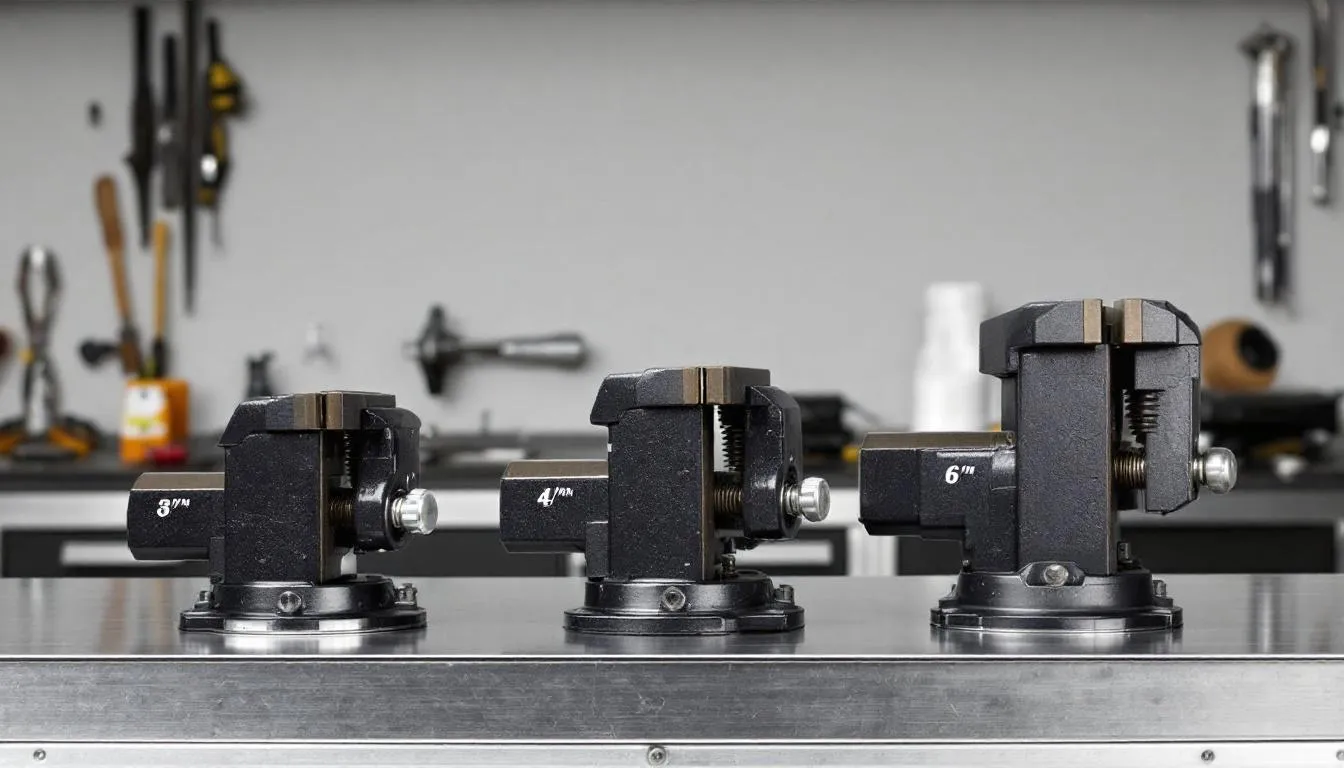
Gimbel Automation has developed a comprehensive line of air vises designed to meet diverse CNC machining requirements. Their product range spans from compact 3-inch models suitable for smaller components to robust 6-inch units capable of handling substantial workpieces, with prices reflecting the precision engineering and construction quality that defines professional-grade pneumatic workholding.
The 3” (75mm) AutoVise™ model, priced at $2,679, represents an excellent entry point for shops looking to integrate pneumatic workholding into their operations. This unit provides sufficient jaw width for many common machining applications while maintaining the precision capabilities that make air vises indispensable for quality-focused manufacturing. The compact footprint makes it ideal for machines with limited table space or for multi-vise setups where maximizing workpiece capacity requires careful space management.
Stepping up to the 4” (100mm) AutoVise™ at $2,789, machinists gain additional capacity for medium-sized workpieces without significantly increasing the machine table footprint. This size often represents the sweet spot for general purpose CNC machining, offering enough jaw opening to accommodate most typical parts while maintaining the speed and precision advantages that justify the investment in pneumatic workholding technology.
For larger components, the 6” (150mm) AutoVise™, priced at $4,379, provides the jaw opening and clamping force needed for substantial workpieces. This model excels in applications where traditional large vises would require significant manual effort to operate effectively, making it particularly valuable in production environments where operator fatigue and consistency concerns can impact both productivity and part quality.
The Rotary AutoVise™ models expand capabilities into 4th and 5th axis applications, with pricing ranging from $3,089 to $4,199 depending on configuration. These specialized units enable complex geometries and multi-sided machining operations while maintaining the automated control and precision positioning that make air vises so valuable in modern CNC operations.
To complete the automation package, the MCodeAir™ programmable dual output kit at $879 provides the control interface needed for seamless integration with CNC machine software. This accessory transforms manual air vise operation into a fully automated process where clamping and unclamping occur automatically as part of the machining program, eliminating operator intervention and ensuring consistent cycle times. Programmable air vises can operate 1 or 2 air vises individually via M code, offering flexibility for diverse manufacturing setups.
Key Features and Construction
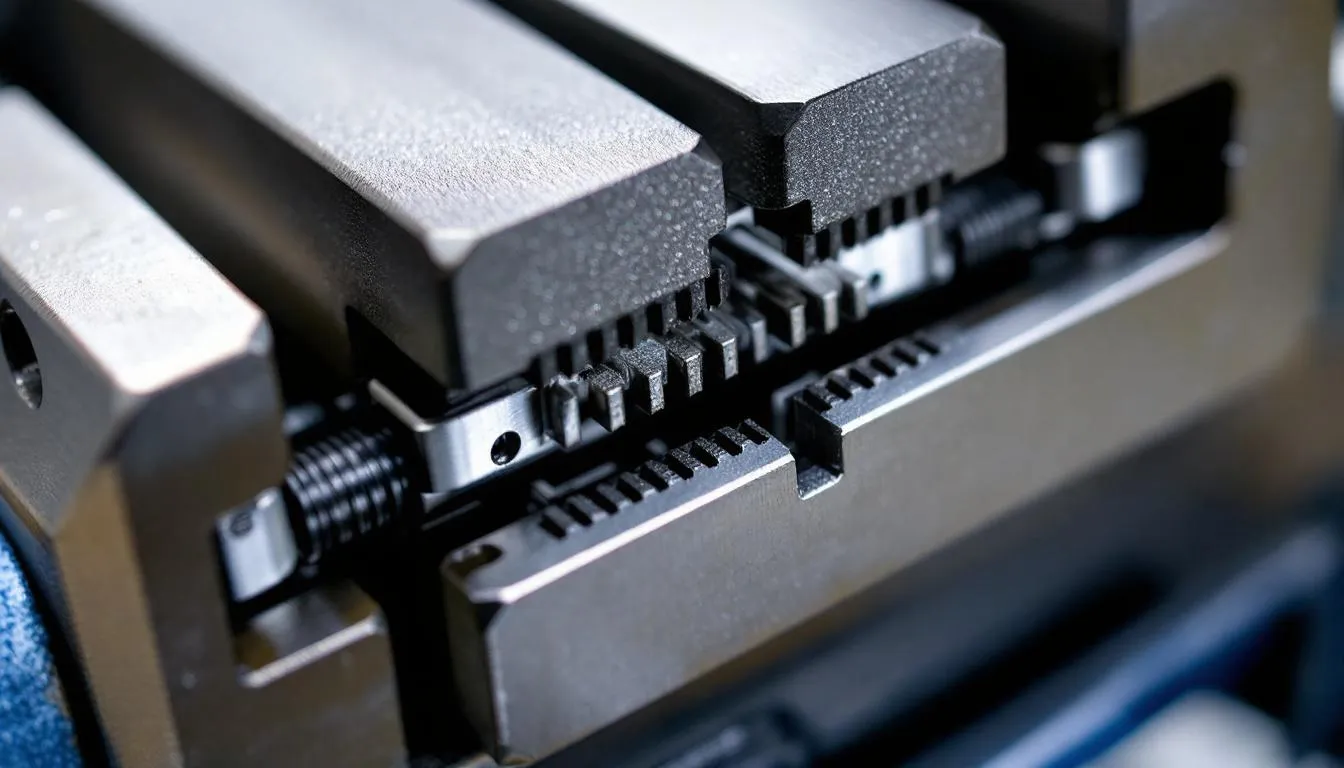
All-steel construction forms the foundation of Gimbel Automation’s air vises, ensuring durability and long-term reliability in demanding production environments. Unlike lighter-duty units that may incorporate aluminum or composite materials, the robust steel construction provides the rigidity necessary for maintaining dimensional accuracy under high clamping loads and repetitive cycling. Many modern pneumatic vises include built-in safety features, such as spring-retention mechanisms that maintain clamping force even if air pressure is lost.
The fully serrated adjustable hard jaws represent a significant innovation in pneumatic vise design, eliminating the need for custom soft jaws in many applications. Traditional vise setups often require machining soft jaws to match specific workpiece geometries, a time-consuming process that adds setup costs and complexity. The serrated hard jaw design grips workpieces securely without requiring custom machining, dramatically reducing setup times and operational costs.
Self-centering design ensures consistent workpiece positioning regardless of operator skill level or attention to detail. This feature becomes particularly valuable in automated cells where part loading may be performed by less experienced operators or robotic systems. The automatic centering action removes variables that could lead to inconsistent part positioning and subsequent quality issues.
Adjustable clamping force via air inlet regulation allows operators to optimize holding power for different material requirements. Delicate workpieces that might be damaged by excessive force can be held with reduced pressure, while robust parts requiring maximum security can benefit from full clamping force. This adjustability ensures that the vise adapts to the workpiece rather than requiring the workpiece to accommodate fixed clamping parameters.
Fast actuation speeds improve machine operation efficiency by minimizing non-cutting time. Where traditional vises might require 20-30 seconds for proper clamping, air vises typically complete the operation in under 5 seconds. This speed improvement becomes particularly significant in high-volume production where cycle time reduction directly impacts profitability and competitiveness.
Applications in CNC Machining
Automated manufacturing environments benefit tremendously from air vises because they eliminate the need for manual intervention during workpiece changeover. In lights-out manufacturing operations or minimally-staffed production runs, the ability to program clamping and unclamping operations through M-codes allows machines to run continuously without operator attention to workholding tasks.
High-volume production runs where speed and consistency are critical represent ideal applications for pneumatic vise technology. The combination of rapid actuation, repeatable positioning, and programmable control eliminates variables that can accumulate into significant quality or productivity issues over large production quantities. Each part receives identical clamping force and positioning, ensuring consistent machining results across the entire production run.
Precision machining operations demanding repeatable workpiece positioning find air vises indispensable for maintaining tight tolerances. The self-centering mechanism eliminates positioning errors that might occur with manual workholding, while the consistent clamping force prevents workpiece movement that could compromise dimensional accuracy or surface finish quality.
Integration with Haas VMC and other CNC machines demonstrates the versatility of modern air vise systems. Most quality pneumatic vises include the necessary hardware and software compatibility to work seamlessly with popular CNC control systems, making implementation straightforward for shops already using these machine platforms.
Fourth and fifth axis rotary applications benefit from specialized rotary air vise models that maintain workholding precision while enabling complex part geometries. These applications often require multiple setups with traditional workholding, but rotary air vises allow complete part machining in a single setup, improving accuracy while reducing handling time and setup costs.
Advantages of Air Vises Over Traditional Vises
Faster clamping and unclamping cycles represent the most immediately obvious advantage of air vises over manual alternatives. Where traditional vise operation might require 30-60 seconds per workpiece change, air vises typically complete the same operation in under 10 seconds. This time savings compounds dramatically over production runs, often justifying the investment cost through reduced cycle times alone.
Consistent clamping force eliminates variation between operators and shifts, ensuring that part quality remains constant regardless of who loads the machine. Traditional vises rely on operator judgment and physical capability to determine appropriate clamping force, leading to variations that can affect part quality, tool life, and dimensional accuracy. Air vises deliver identical force every time, removing this source of variability from the manufacturing process.
Programmable control through M-codes enables complete automation of the workholding process, integrating clamping operations seamlessly into CNC programs. This capability allows for sophisticated automation strategies where workpiece loading, machining, and unloading can occur without operator intervention, maximizing machine utilization and enabling lights-out manufacturing operations.
Reduced operator fatigue and improved safety result from eliminating the physical effort required for manual vise operation. Large workpieces or high-volume production can create ergonomic challenges with traditional vises, particularly when operators must apply significant force to achieve proper clamping. Air vises remove this physical demand while also reducing the risk of pinch injuries or repetitive strain problems.
Better repeatability leads to improved part quality and reduced scrap rates. The combination of consistent positioning and clamping force helps ensure that each part experiences identical machining conditions, reducing the variation that can lead to out-of-specification parts or tool wear issues that might not be detected until multiple parts have been affected.
Automation and Control Options
M-code programmable control integration represents the pinnacle of air vise automation, allowing clamping operations to be controlled directly from CNC software without operator intervention. Modern CNC controls can execute commands that open vises, allow part loading, close vises with appropriate force, and subsequently open them for part removal, all as programmed steps within the machining cycle.
Foot pedal operation provides manual override capabilities for setup operations or situations where automatic control may not be appropriate. This dual control approach offers flexibility for different operating modes while maintaining the option for full automation when conditions permit. Operators can use foot pedal control during initial setup or troubleshooting while relying on automatic operation for production runs.
Dual-vise control systems enable management of multiple workstations from a single control interface, maximizing machine table utilization and production capacity. These systems allow shops to run multiple parts simultaneously or stage workpieces for continuous operation, further improving machine utilization and reducing per-part cycle times.
Pressure monitoring and regulation ensures optimal clamping force for different applications while preventing damage to delicate workpieces. Advanced control systems can adjust clamping pressure based on programmed parameters, material properties, or operator input, providing the flexibility needed for diverse manufacturing requirements while maintaining the consistency that makes air vises valuable.
Installation and Setup Considerations
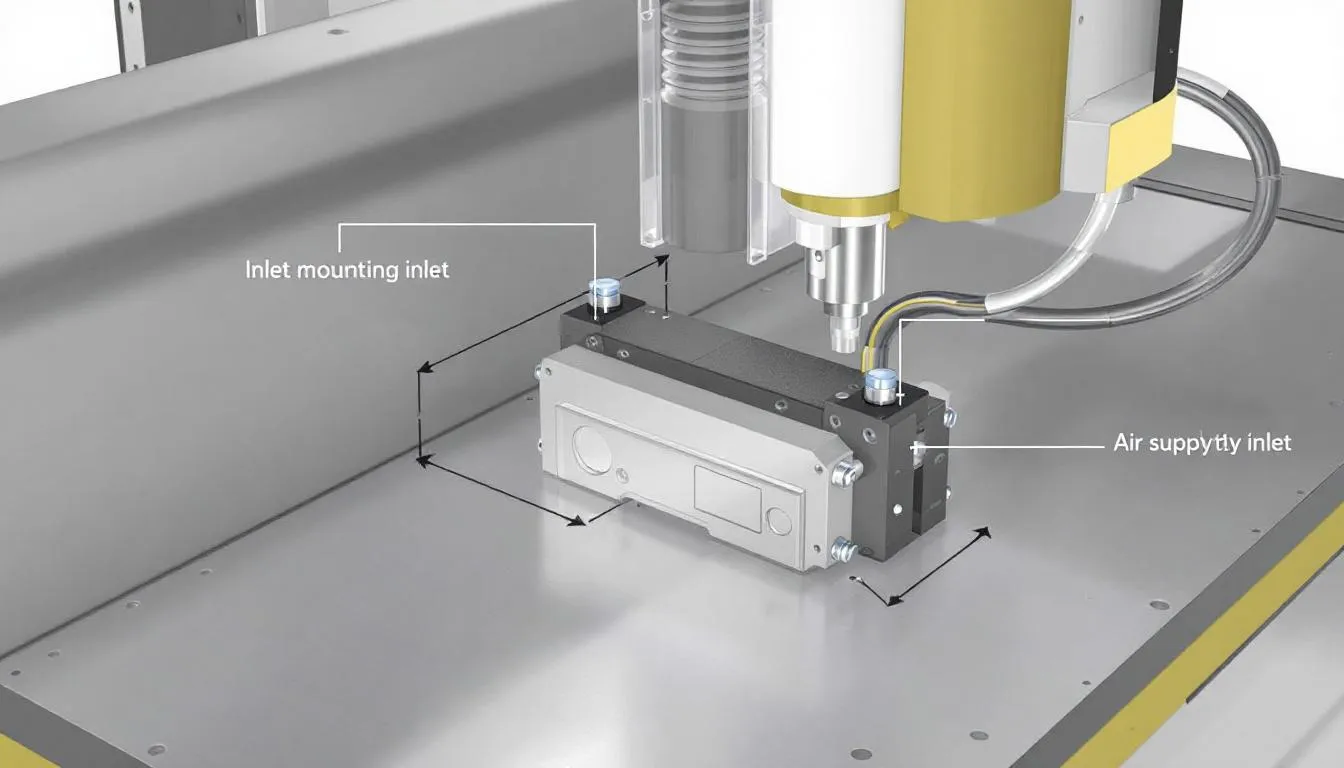
Air supply requirements form the foundation of successful air vise implementation, with most units requiring compressed air regulated between 90 and 120 psi with adequate flow capacity to support rapid actuation. The air supply must be clean and dry to prevent contamination that could damage seals or interfere with smooth operation. Many installations benefit from dedicated air preparation equipment including filters, regulators, and moisture separators to ensure optimal performance and longevity.
Machine compatibility considerations focus primarily on control system integration and physical mounting requirements. Gimbel Automation air vises are designed for compatibility with Haas mills running NGC software version 100.20.000.1200 or later, though similar compatibility exists with other major CNC control systems. Verification of software compatibility and available M-code functions should precede any installation planning.
Mounting considerations vary depending on machine configuration and table size, with most air vises requiring standard T-slot mounting hardware and appropriate table space for installation and operation. The mounting location should provide adequate access for workpiece loading while ensuring that the vise jaw opening aligns properly with machine travel limits and doesn’t interfere with other machine components or accessories.
Programming setup using M70/M71 commands enables individual vise control in multi-vise installations, allowing sophisticated automation strategies where different vises can operate independently or in coordinated sequences. Proper programming setup requires understanding both the CNC control system capabilities and the specific air vise control interface to ensure reliable operation and prevent programming conflicts.
Safety protocols for pneumatic system installation and operation must address both the compressed air system and the mechanical components of the vise installation. Proper lockout/tagout procedures, emergency stop integration, and operator training ensure safe operation while protecting both personnel and equipment from potential hazards associated with pneumatic equipment operation.
Selecting the Right Air Vise Size
Workpiece size considerations for 3”, 4”, and 6” vise models should account for both current production requirements and anticipated future needs. The jaw opening specification represents the maximum workpiece width that can be accommodated, but practical considerations including jaw thickness and workpiece geometry may reduce usable capacity. A thorough analysis of current and planned workpiece dimensions helps ensure appropriate size selection.
Clamping force requirements depend on material type, machining operations, and workpiece configuration. Harder materials or aggressive machining operations may require higher clamping forces to prevent workpiece movement, while delicate components might be damaged by excessive force. Understanding the relationship between air pressure, vise design, and resulting clamping force helps optimize both workpiece security and part quality.
Machine table space and T-slot compatibility factors influence both vise size selection and installation planning. Larger vises require more table space and may limit the number of units that can be installed on a given machine. Additionally, T-slot spacing and orientation must accommodate the vise mounting pattern to ensure secure installation and proper operation.
Production volume considerations affect ROI calculations and help justify the investment in pneumatic workholding technology. Higher production volumes typically justify larger investments in automation and efficiency improvements, while lower volumes might be better served by smaller, less expensive units that still provide automation benefits without excessive capital investment.
Future expansion needs should be considered when selecting initial air vise configurations, particularly in growing shops where production requirements may change over time. Modular systems and compatible accessories can provide upgrade paths that protect initial investments while accommodating changing requirements as business needs evolve.
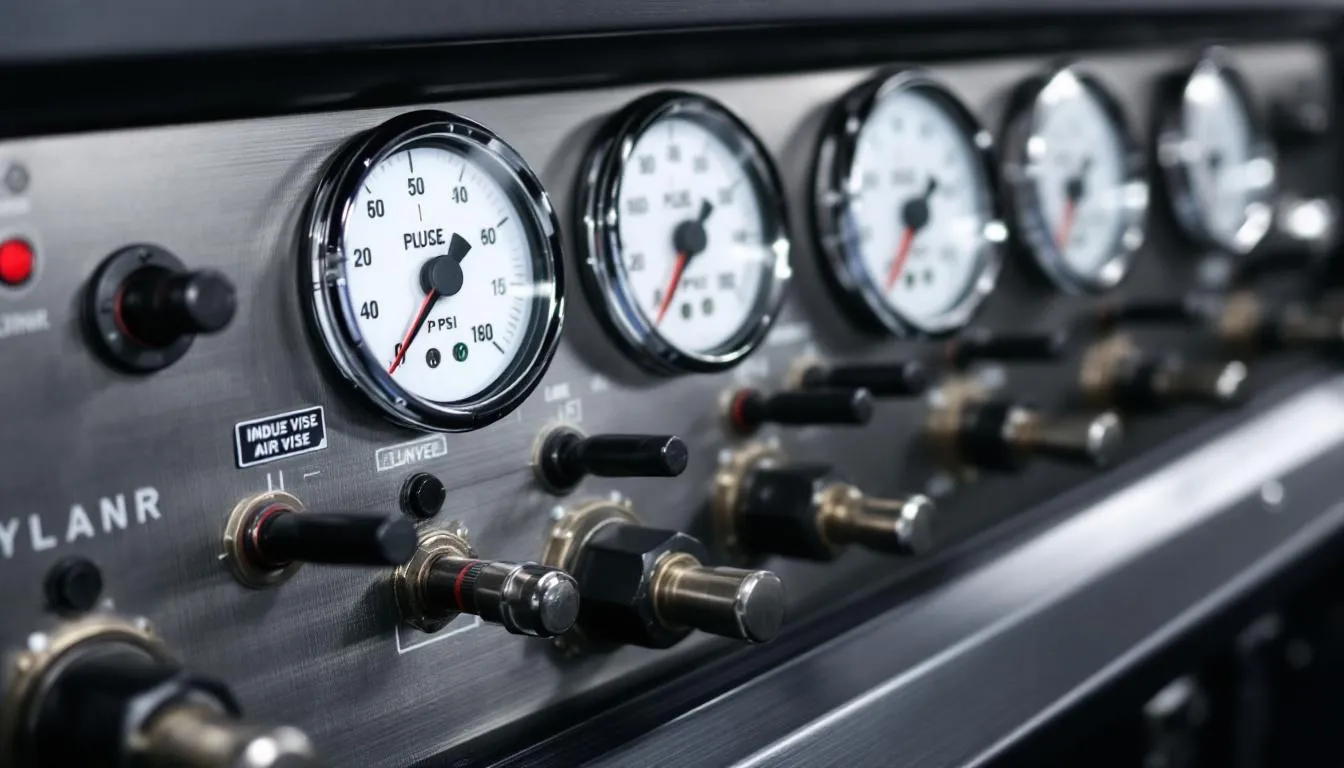
Maintenance and Troubleshooting
Regular maintenance schedules for pneumatic components ensure reliable operation and prevent unexpected downtime that could disrupt production schedules. Key maintenance tasks include inspection of seals, lubrication of moving components, verification of air system integrity, and cleaning of debris that might interfere with smooth operation. Most manufacturers provide specific maintenance schedules and procedures that should be followed to maintain warranty coverage and ensure optimal performance.
Air filtration requirements prevent contamination damage that could compromise vise performance or reduce component lifespan. Compressed air systems naturally accumulate moisture, oil, and particulate contamination that can damage seals, cause erratic operation, or create safety hazards. Proper filtration equipment and regular filter replacement form essential elements of any pneumatic vise installation.
Common troubleshooting issues including pressure loss and jaw alignment typically have straightforward solutions when proper diagnostic procedures are followed. Pressure loss might indicate seal wear, connection problems, or air supply issues, while jaw alignment problems could suggest mounting issues, wear, or damage. Systematic troubleshooting approaches help identify root causes quickly and minimize downtime.
Replacement parts availability and service support options should be evaluated when selecting air vise suppliers, as these factors significantly impact long-term ownership costs and production reliability. Reputable manufacturers maintain parts inventories and provide technical support to help users resolve issues quickly and maintain productive operation throughout the equipment lifecycle.
Preventive maintenance practices extend vise lifespan and reduce the likelihood of unexpected failures that could disrupt production. Regular inspection schedules, proper lubrication, appropriate operating procedures, and prompt attention to developing issues help maximize return on investment while minimizing maintenance costs and production interruptions.
The integration of air vises into modern CNC machining operations represents more than just an equipment upgrade—it’s a strategic investment in manufacturing capability that pays dividends through improved efficiency, consistency, and automation potential. Pneumatic systems generally have fewer moving parts and are less complex than hydraulic systems, resulting in lower costs and reduced maintenance requirements. As manufacturing continues to evolve toward higher precision and greater automation, pneumatic workholding solutions like those offered by Gimbel Automation provide the foundation for competitive advantage.
Whether you need a compact 3” unit for small parts or a robust 6” model for larger components, the right air vise can transform your machining operations by eliminating variables, reducing cycle times, and enabling automation strategies that were impractical with manual workholding. The combination of proven technology, comprehensive product ranges, and ongoing support makes air vises an essential consideration for any shop serious about maximizing CNC productivity and maintaining competitive advantage in today’s demanding manufacturing environment.