




Five axis machining represents one of the most significant advances in modern manufacturing technology, enabling the production of complex parts that would be impossible or prohibitively expensive using traditional machining methods. This advanced cnc machining technique uses computer numerical control to move cutting tools along five different axes simultaneously, combining three linear axes with two rotational axes for unprecedented precision and capability. It is a subtractive manufacturing process that removes material from a larger block to create a part.
The evolution of five axis machining began in aerospace applications during the 1940s, when engineers needed to manufacture turbine blades and other complex geometries with tight tolerances. Today, this technology has become widely accessible across manufacturing industries, transforming how companies approach the production of intricate parts and complex shapes.
This comprehensive guide will explore every aspect of five axis machining, from the fundamental technical principles to practical business considerations including ROI analysis and implementation strategies.
What is Five Axis Machining?
Five axis machining uses computer numerical control (CNC) to move cutting tools along five different axes simultaneously, revolutionizing the manufacturing of complex parts. Unlike traditional machining that relies on three linear axes, this advanced technology combines three linear axes (X, Y, Z) with two rotational axes (A, B, or C) for complex part manufacturing.
This capability enables machining of intricate geometries, deep cavities, and complex surfaces in a single setup, eliminating the need for multiple setups that plague traditional machining processes. The technology allows manufacturers to access virtually any surface of a workpiece without manual repositioning, dramatically reducing setup time and improving precision.
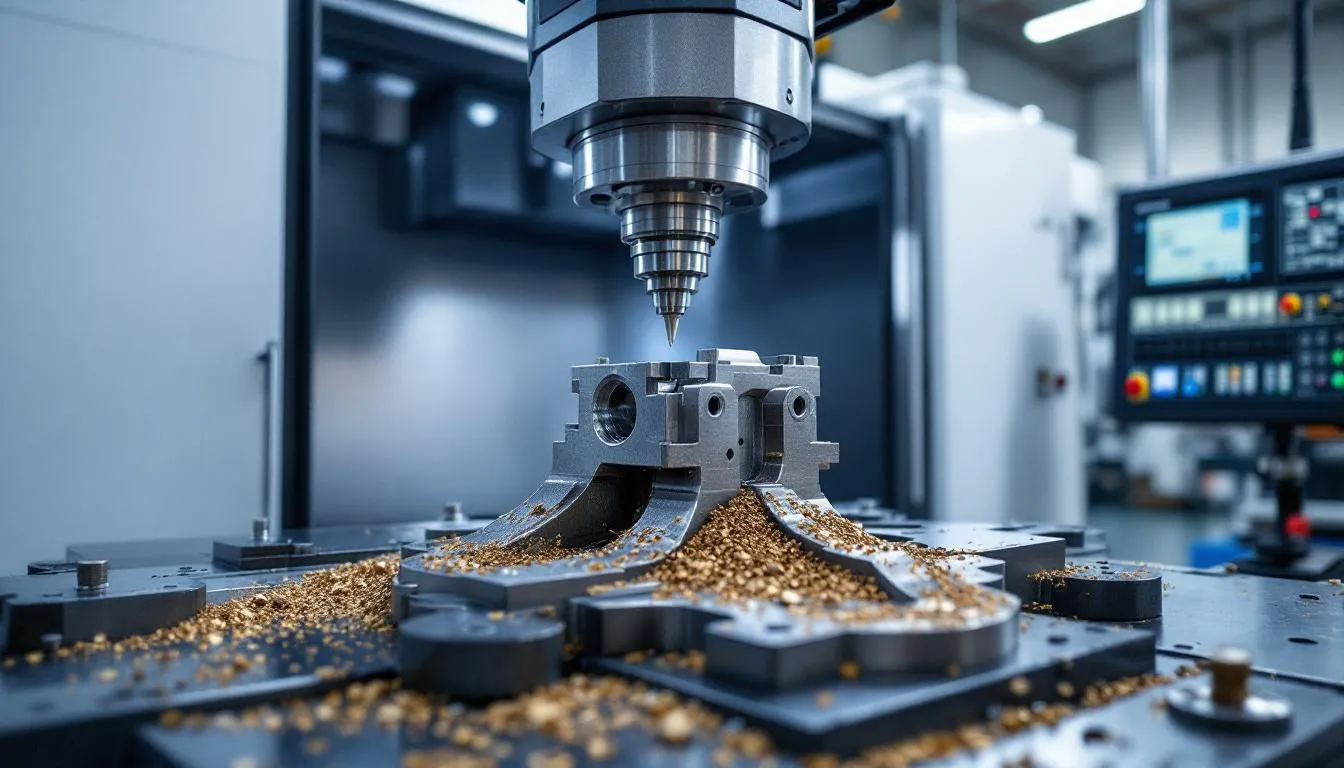
The historical development of five axis machining evolved from aerospace applications in the 1940s to become widely accessible across manufacturing industries. Initially developed to address the challenges of manufacturing turbine blades and other aerospace components, the technology has expanded to serve automotive, medical, energy equipment, and precision manufacturing sectors. Applications of five-axis machining include creating turbine blades, orthopedic implants, and engine parts.
Early five axis machines were massive, expensive systems limited to large aerospace contractors. However, advances in CNC technology, servo motors, and computer aided design have made these machines more compact, affordable, and user-friendly. Modern 5 axis machines can fit in standard shop floor environments while delivering sub-micron precision.
The fundamental principle behind five axis machining lies in its ability to maintain optimal cutting angles throughout the machining process. By continuously adjusting the cutting tool orientation relative to the workpiece surface, these machines achieve superior surface finishes, longer tool life, and faster material removal rates compared to traditional machining methods.
Understanding the Five Axes in Detail
The five axes in five axis machining consist of three linear axes and two rotational axes, each serving specific functions in creating complex geometries. Understanding these axes is crucial for anyone working with 5 axis cnc machining systems.
The x axis provides horizontal movement left and right, representing lateral motion in the machining envelope. This linear axis controls the cutting tool or workpiece position along the width of the machine, enabling precise positioning for features requiring lateral access.
The y axis controls horizontal movement forward and backward, representing longitudinal motion within the work envelope. This axis works in conjunction with the x axis to position the cutting tool anywhere within the horizontal plane of the machine.
The z axis manages vertical movement up and down, controlling the depth of cut and vertical positioning. This axis is particularly important for controlling cutting tool engagement and ensuring proper clearance during rapid positioning moves.
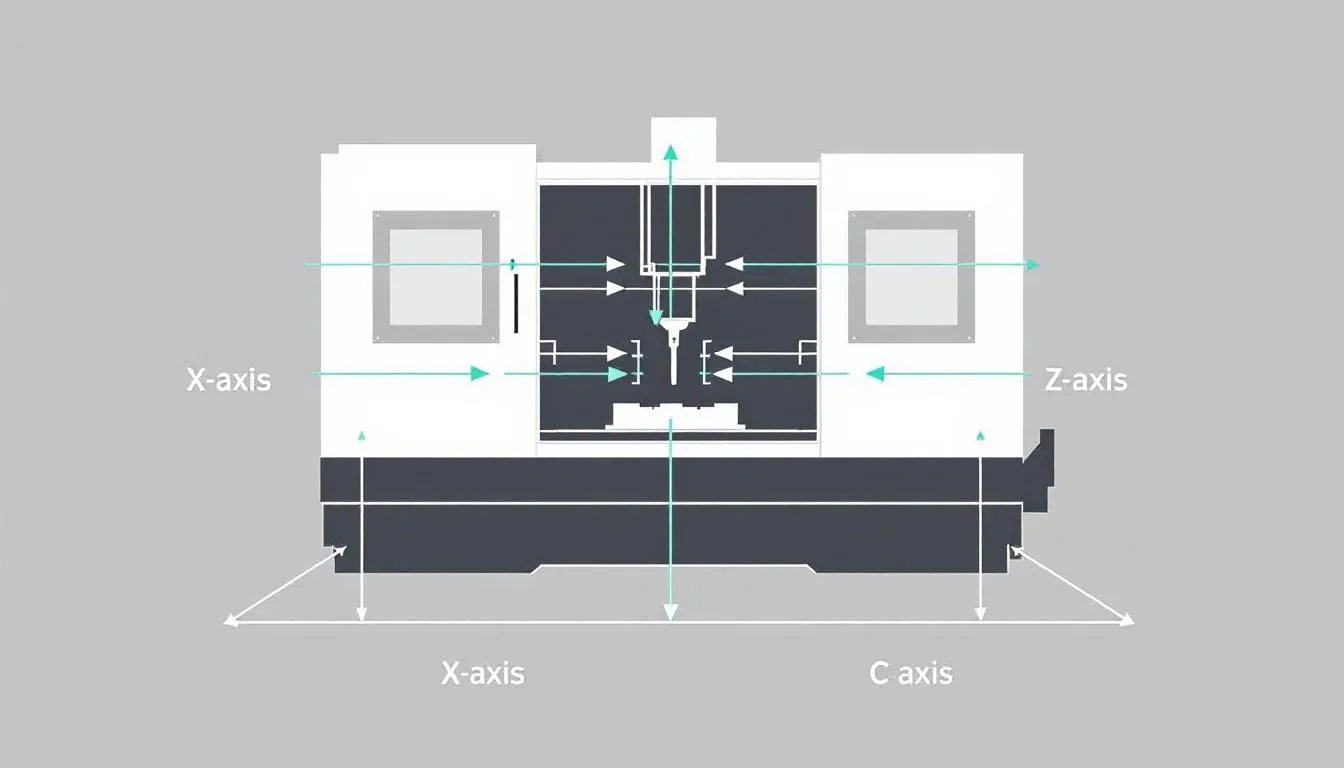
The a axis provides rotation around the x axis, creating tilt motion that allows access to angled surfaces. This rotational axis enables the cutting tool or workpiece to tilt forward and backward, providing access to surfaces that would otherwise require manual repositioning.
The b axis controls rotation around the y axis, providing swivel motion for accessing complex geometries. This axis allows left and right tilting motion, complementing the a axis to provide complete angular access to workpiece surfaces.
When systems use a c axis instead of an a or b axis, it provides rotation around the z axis, creating spin motion. This configuration is particularly useful for machining cylindrical parts or features requiring rotational access around the vertical axis.
Different machine configurations use various combinations like A+B, B+C, or A+C rotational axes, each optimized for specific types of work. The choice between these configurations depends on the typical part geometry, size constraints, and required precision levels. Head/table configurations combine rotary table movement with spindle head rotation, while table/table systems use two rotary axes on the workpiece side.
Types of Five Axis Machining Operations
Five axis machining operations fall into two primary categories: simultaneous five axis machining and 3+2 positioning, each suited for different applications and part geometries.
Simultaneous five axis machining involves all five axes moving continuously during cutting operations, enabling the machining of complex surfaces with constantly changing orientations. This approach is ideal for freeform surfaces like turbine blades, compressor blades, and complex molds where the cutting tool must maintain optimal angles throughout the entire toolpath.
During simultaneous operations, the CNC system coordinates all axes simultaneously to maintain consistent chip load and surface finish. This requires sophisticated cam software capable of generating smooth, collision-free tool paths while optimizing cutting conditions. The result is superior surface finishes and the ability to machine geometries impossible with traditional methods.
3+2 positioning, also known as five axis indexing, involves locking the rotational axes into specific positions before performing three-axis machining operations. This approach is suitable for angled holes, multi-sided features, and simpler geometries that don’t require continuous axis interpolation.
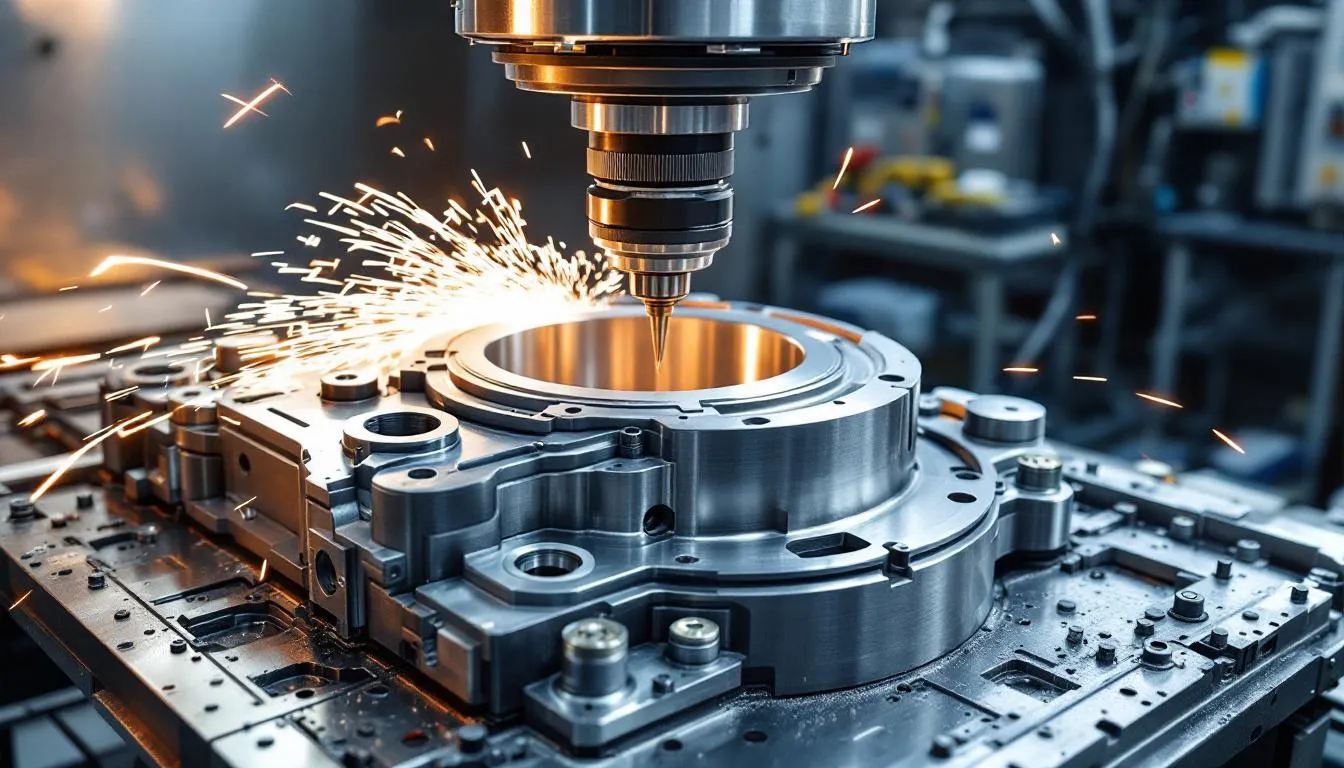
The 3+2 approach simplifies programming since operators can think in terms of traditional three axis operations performed at different angles. This method reduces programming complexity while still providing access to multiple part surfaces in a single setup, eliminating the need for multiple setups required in traditional machining.
Simultaneous operation provides the greatest flexibility for complex shapes, allowing tangential cutting that removes more material per revolution and maintains consistent cutting forces. This approach is essential for aerospace components, medical implants, and precision molds requiring smooth, flowing surfaces.
The choice between simultaneous and 3+2 operations depends on part complexity, required surface finish, and programming capabilities. Many shops start with 3+2 operations to gain experience before advancing to full simultaneous five axis programming.
Five Axis Machine Configurations
Five axis machine configurations vary significantly based on how the rotational axes are implemented, with each design offering specific advantages for different applications and part types.
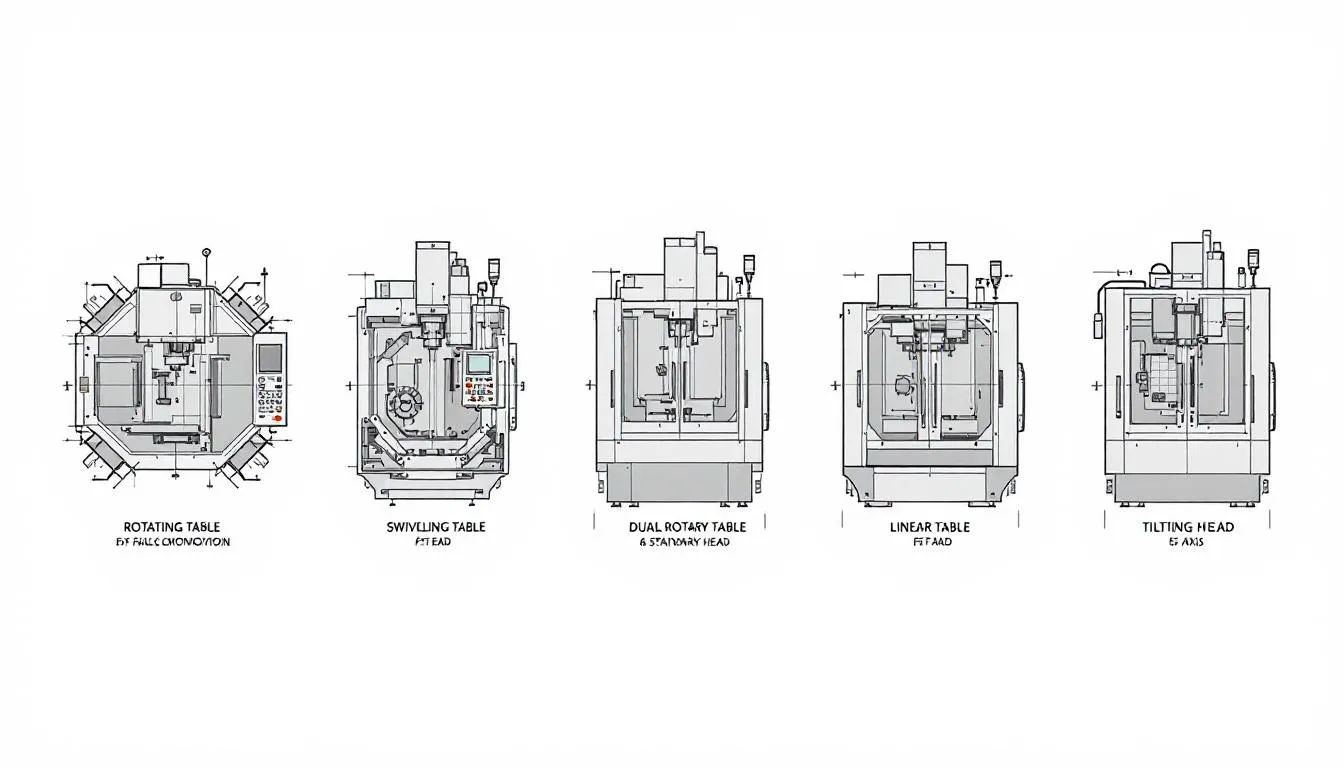
Table/table configuration positions the workpiece on rotary tables while keeping the spindle head stationary. In this setup, both rotational axes manipulate the workpiece, typically using A and C axes or B and C axes. This configuration excels at machining heavy parts since the spindle doesn’t need to support additional rotary mechanisms.
The table/table design provides excellent rigidity for heavy cutting operations and maintains consistent spindle speed characteristics regardless of rotational axis position. This configuration is particularly suitable for large aerospace components, energy equipment housings, and other substantial workpieces requiring high material removal rates.
Head/head configuration locates both rotational axes in the spindle head, allowing the cutting tool to approach the workpiece from virtually any angle while the workpiece remains stationary. This setup typically uses B and C axes integrated into the spindle head assembly.
Head/head machines excel at machining complex, lightweight parts that benefit from constant workpiece orientation. This configuration is ideal for intricate parts like medical implants, precision molds, and aerospace components requiring access from multiple angles without workpiece movement.
Head/table configuration combines a rotary table for workpiece rotation with a tilting spindle head, typically using A and C axes or B and C axes. This hybrid approach balances the advantages of both previous configurations while providing excellent versatility for various part sizes and complexities.
Trunnion table systems provide A and C axis rotation for heavy workpieces, offering excellent support and rigidity for large components. These systems can handle substantial workpieces while maintaining precision, making them popular in aerospace and energy industries.
Swivel head designs incorporate B and C axis movement in the cutting head, providing excellent flexibility for complex geometries while maintaining workpiece stability. This configuration is particularly effective for precision work requiring frequent tool angle changes.
Key Benefits of Five Axis Machining
Five axis machining delivers substantial advantages over traditional machining methods, with quantifiable improvements in efficiency, precision, and capability that directly impact manufacturing profitability.
Reduced setup time represents one of the most significant benefits, as complex parts can be machined in a single setup instead of requiring multiple operations. Traditional machining of complex parts often requires 5-10 different setups, each introducing potential errors and consuming valuable production time. Five axis machining can reduce setup requirements by 60-80% for complex geometries.
Improved surface finish results from the ability to use shorter cutting tools that maintain optimal angles throughout the machining process. Shorter, more rigid cutting tools reduce vibration and chatter, producing superior surface finishes that often eliminate secondary finishing operations. This capability is particularly valuable for precision applications requiring minimal hand finishing. Five-axis machining provides better surface finishes due to the ability to use shorter cutting tools.
Enhanced precision eliminates errors from part repositioning and re-fixturing, as the workpiece remains in the same coordinate system throughout the entire machining process. This single-setup approach maintains tolerances within sub-micron levels, critical for aerospace, medical, and precision applications.
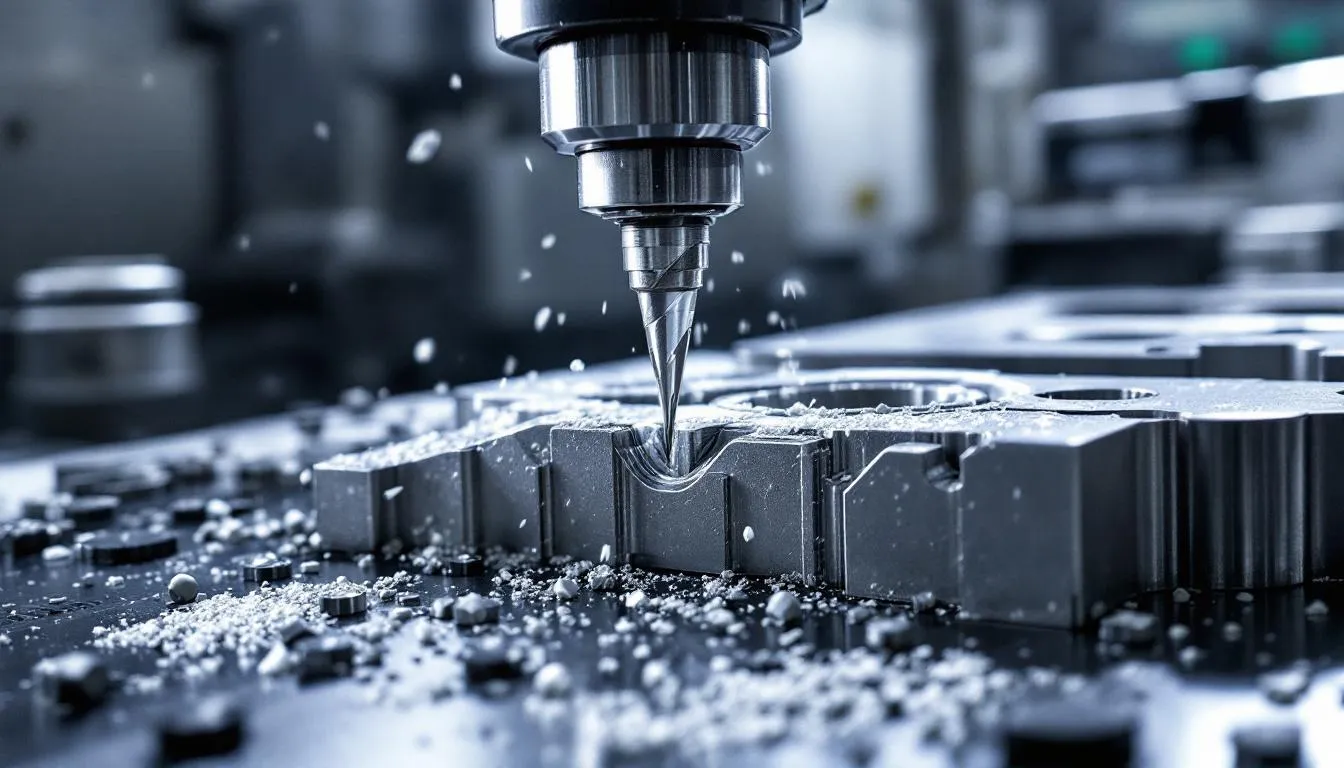
Faster cycle times result from tangential cutting that removes more material per tool rotation compared to traditional approaches. The ability to maintain optimal cutting angles enables higher feed rates and deeper cuts, reducing overall machining time by 25-50% for complex parts.
Complex geometry capability provides access to all part surfaces without manual repositioning, enabling the manufacture of parts previously impossible with traditional methods. Features like compound-angle holes, deep cavities, and flowing surfaces can be machined directly without specialized fixtures or secondary operations.
Better tool life results from optimal cutting angles that reduce tool wear and breakage. By maintaining proper cutting geometry throughout the process, tools last longer and perform more consistently, reducing tooling costs and minimizing production interruptions. Longer tool life in five-axis machining is achieved by keeping the cutting tool in an optimal tangential position, which reduces tool wear.
Higher productivity stems from reduced labor requirements and fewer manual interventions. Operators can focus on programming and quality control rather than constant part handling and repositioning, increasing overall shop floor efficiency.
The combination of these benefits creates a compelling business case for five axis adoption, particularly for manufacturers producing complex, high-value components where precision and efficiency directly impact profitability.
Industries and Applications
Five axis machining serves critical roles across multiple industries, each leveraging the technology’s unique capabilities to manufacture components impossible to produce with traditional methods.
Aerospace industry relies heavily on five axis machining for turbine blades, engine components, and structural parts requiring tight tolerances. Modern jet engines contain hundreds of precision components with complex geometries, flowing surfaces, and stringent material requirements. Turbine blades exemplify the technology’s capabilities, featuring twisted airfoil shapes that require continuous five-axis interpolation to maintain proper surface quality and dimensional accuracy.
Aerospace applications extend beyond engine components to include structural brackets, landing gear components, and flight control surfaces. These parts often combine multiple materials and require precision holes, complex curves, and weight-optimized designs achievable only through CNC advanced cnc machining techniques.
Automotive industry utilizes five axis machining for transmission components, engine blocks, and complex brackets and housings. Modern automotive transmissions contain intricate valve bodies, planetary gear carriers, and housing components with multiple bores and complex internal geometries. Five axis capability enables these parts to be machined completely in single setups, ensuring precise alignment between features.
Performance automotive applications particularly benefit from five axis machining, with components like intake manifolds, turbocharger housings, and suspension components requiring complex internal passages and optimized flow characteristics.
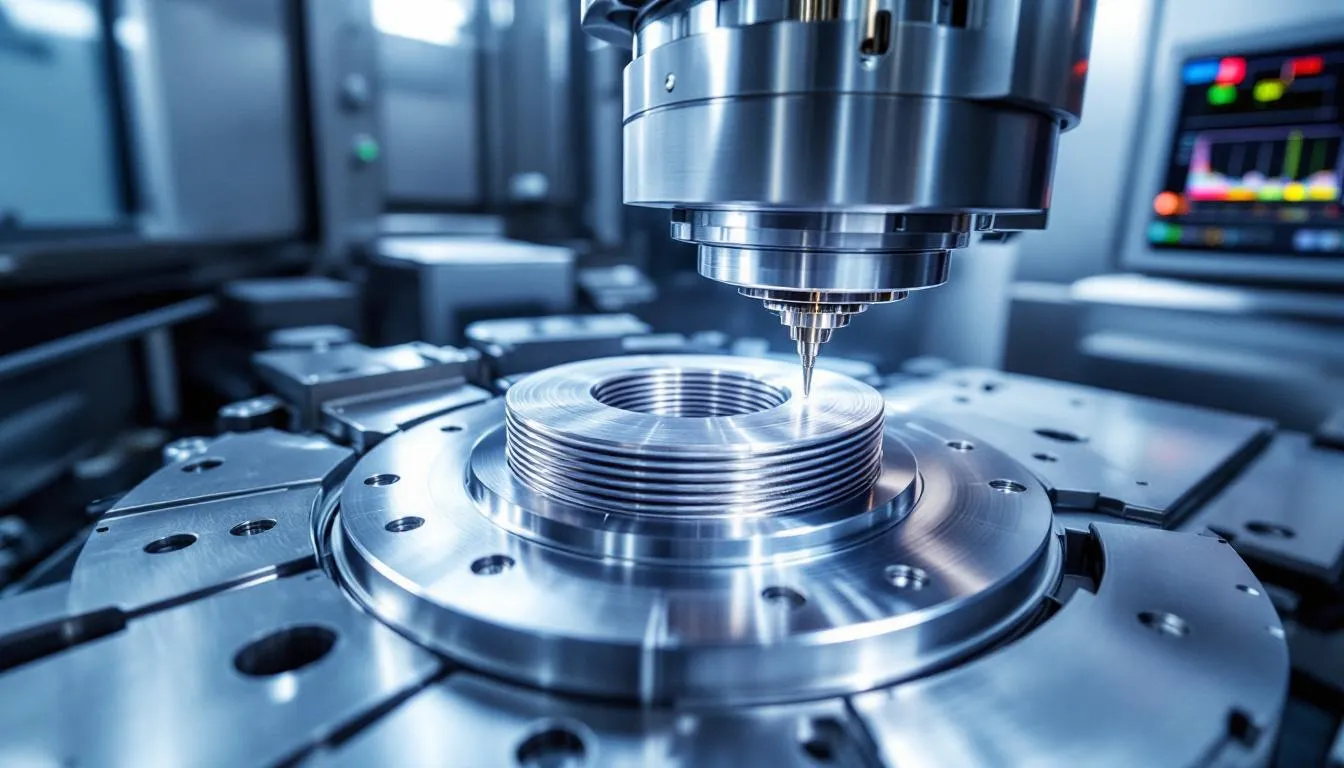
Medical device manufacturing depends on five axis machining for orthopedic implants, surgical instruments, and prosthetics. Hip and knee implants require patient-specific geometries, smooth surface finishes, and biocompatible materials that demand precise machining control. The ability to machine complex curves and maintain consistent surface finishes makes five axis technology essential for medical applications.
Surgical instruments benefit from the precision and flexibility of five axis machining, particularly complex tools requiring multiple angles, sharp edges, and intricate internal features. Custom prosthetics and cranial implants represent growing applications where patient-specific geometry drives manufacturing requirements.
Mold and die manufacturing leverages five axis capabilities for injection molds, stamping dies, and complex tooling. Modern injection molds feature complex cooling channels, undercuts, and flowing surfaces that require five axis access for efficient production. The ability to machine molds completely without secondary operations reduces lead times and improves quality.
Energy sector applications include oil and gas components, renewable energy parts, and power generation equipment. Wind turbine components, hydroelectric turbine runners, and nuclear components all require the precision and complexity capabilities that five axis machining provides.
Defense applications encompass precision weapons components, radar systems, and specialized equipment requiring the highest levels of accuracy and surface finish. The ability to maintain tight tolerances while machining exotic materials makes five axis technology essential for defense manufacturing.
Marine industry applications focus on propellers, hull components, and engine parts that require complex curves and optimized hydrodynamic characteristics. Large propellers and marine engine components benefit from the ability to machine complex geometries in single setups.
Challenges and Considerations
Five axis machining implementation presents several significant challenges that manufacturers must address to achieve successful adoption and maximize return on investment.
Higher initial investment represents the most immediate challenge, with machines typically costing between $500,000 and $2 million depending on size, capabilities, and manufacturer. This substantial capital requirement often requires careful justification based on projected workload and expected productivity improvements. Additional costs include specialized tooling, fixturing, and facility modifications required to accommodate these sophisticated cnc machines. 5-axis machines and supporting tools often involve a significant upfront investment, including machine cost, tooling, and software licensing.
The investment extends beyond machine acquisition to include training, software licenses, and ongoing maintenance contracts. Many manufacturers underestimate these additional costs, which can add 30-50% to the initial machine investment over the first three years of operation.
Complex programming requirements demand advanced cam software and skilled programmers capable of generating efficient, collision-free toolpaths. Traditional three axis programmers require extensive additional training to master five axis programming techniques, toolpath optimization, and machine kinematics understanding.
Programming complexity increases exponentially with part complexity, requiring sophisticated simulation software to verify toolpaths and prevent costly collisions. The learning curve for five axis programming typically ranges from 6-12 months for experienced cnc programmers, during which productivity may be reduced.
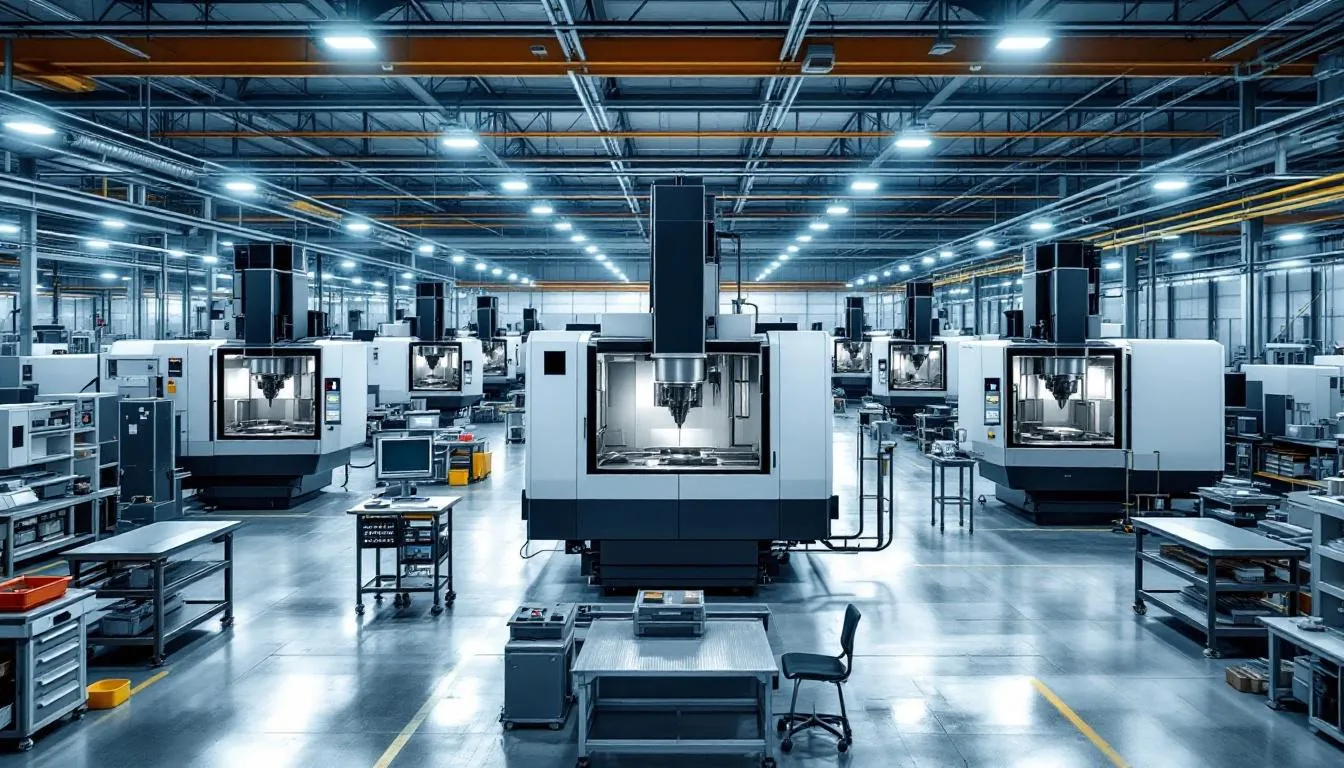
Increased collision risk emerges from having more moving axes that create potential for tool and fixture interference. Unlike traditional three axis operations where collision possibilities are relatively predictable, five axis machining introduces rotational movements that can create unexpected interference conditions.
Effective collision avoidance requires sophisticated simulation software, careful fixture design, and thorough program verification. Many shops implement strict protocols requiring complete simulation before running any five axis program on the actual machine.
Skilled operator shortage presents an ongoing challenge, as finding qualified five axis machinists can be difficult in many regions. The specialized knowledge required for five axis operations extends beyond traditional machining skills to include understanding of machine kinematics, advanced programming techniques, and complex setup procedures.
Training existing personnel represents a significant investment in time and resources, while attracting experienced five axis operators often requires competitive compensation packages. Many manufacturers partner with technical schools or equipment vendors to develop training programs for their workforce.
Longer programming time initially impacts productivity as programmers develop proficiency with five axis techniques. Complex parts may require weeks of programming time compared to days for equivalent three axis operations, though this gap narrows with experience and improved software tools.
Higher maintenance costs result from the increased complexity of five axis mechanisms, which require specialized service technicians and more frequent calibration procedures. The additional servo motors, rotary tables, and complex mechanical systems demand more intensive maintenance schedules compared to simpler three axis machines.
Preventive maintenance becomes critical for maintaining accuracy and minimizing downtime, requiring investment in specialized tools, training, and service contracts. Many manufacturers find that partnering with machine tool builders for comprehensive service agreements helps manage these ongoing costs.
Programming and Software Requirements
Five axis machining demands sophisticated software tools and programming expertise that extend far beyond traditional three axis requirements, representing both a significant investment and learning curve for manufacturing organizations.
Advanced cam software forms the foundation of successful five axis operations, with leading platforms including Mastercam, Fusion 360, NX, PowerMill, and similar professional-grade solutions. These software packages must handle complex kinematics calculations, collision detection, and toolpath optimization while maintaining efficient material removal rates.
Modern cam software incorporates machine-specific kinematics models that accurately represent each machine’s movement capabilities and limitations. This enables programmers to generate toolpaths that maximize machine efficiency while avoiding collisions and maintaining dimensional accuracy.
Post-processors serve as the critical link between cam software and specific cnc machines, converting generic toolpaths into machine-specific G-code that accounts for each machine’s unique characteristics. Five axis post-processors are significantly more complex than their three axis counterparts, requiring precise understanding of machine kinematics and control system requirements.
Simulation software has become essential for verifying toolpaths and preventing costly collisions before machining begins. Advanced simulation packages provide photorealistic representations of the entire machining process, including machine movements, workpiece material removal, and potential interference conditions.
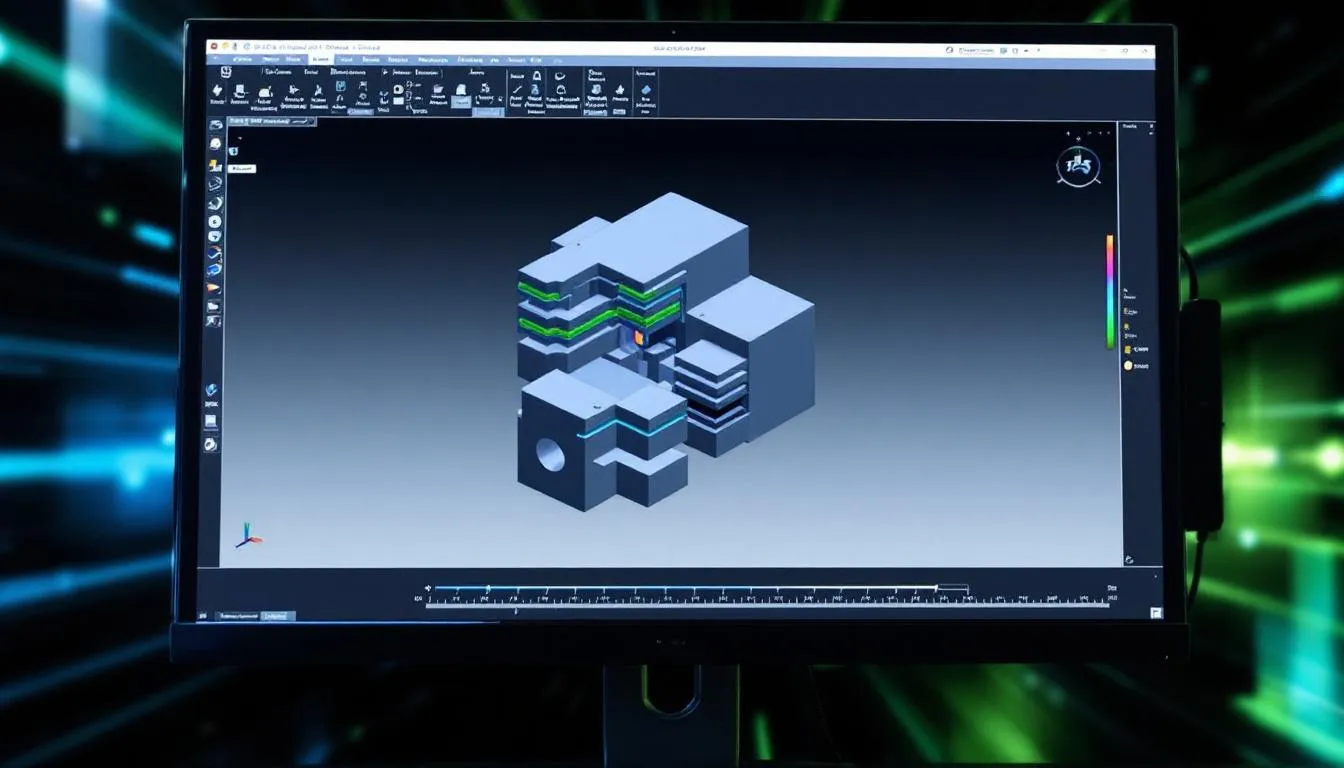
Collision detection algorithms automatically analyze toolpaths to identify potential interference between cutting tools, fixtures, and machine components. These systems can automatically adjust tool angles and positions to maintain safe operations while preserving surface quality and dimensional accuracy.
Digital twin technology enables virtual machining that precisely replicates actual machine behavior, allowing programmers to optimize toolpaths and validate programs without consuming machine time. This capability significantly reduces program development time while improving first-part quality.
Cloud-based solutions are increasingly popular for collaboration between design and manufacturing teams, enabling real-time sharing of models, toolpaths, and machining data. These platforms facilitate remote programming support and enable manufacturers to leverage external expertise when needed.
Training programs typically require 6-12 months for experienced programmers to achieve proficiency in five axis programming techniques. This investment includes software training, machine kinematics understanding, and practical experience with complex part programming.
Successful five axis programming requires understanding of machine capabilities, cutting tool behavior, and workpiece material characteristics. Programmers must balance cycle time optimization with surface quality requirements while maintaining dimensional accuracy throughout the process.
The programming workflow for five axis operations involves part analysis, machining strategy development, toolpath generation, simulation verification, and post-processing optimization. Each step requires careful consideration of machine limitations, cutting tool capabilities, and part requirements.
Many manufacturers find that investing in comprehensive training programs and maintaining relationships with software vendors significantly accelerates the learning process while reducing programming errors and improving overall productivity.
ROI and Business Case Considerations
Evaluating the return on investment for five axis machining requires careful analysis of multiple factors including cycle time improvements, setup reductions, quality enhancements, and competitive positioning advantages.
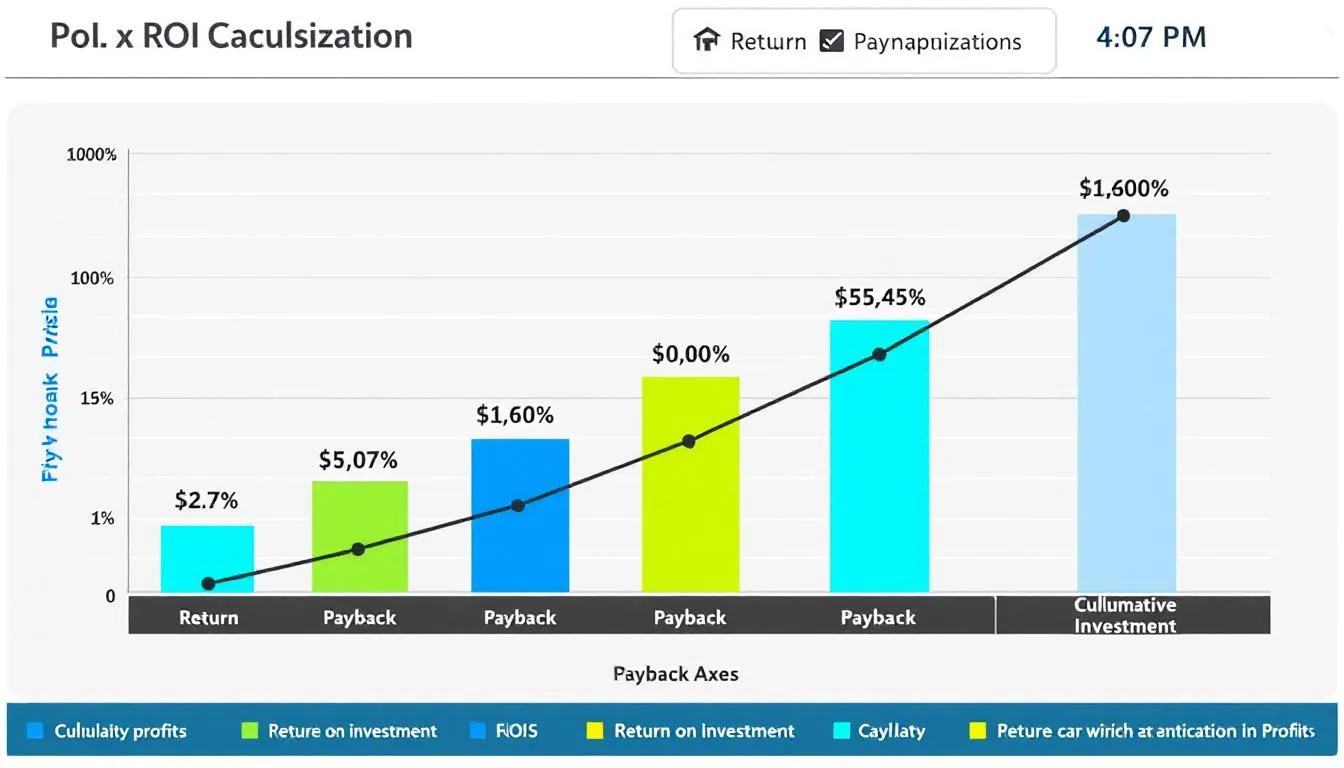
Typical payback periods range from 18-36 months depending on machine utilization, part complexity, and existing manufacturing capabilities. Manufacturers processing high-mix, low-volume work with complex geometries typically see faster payback than those producing simple parts suitable for traditional machining methods.
Setup time reduction represents one of the most significant sources of ROI, with 60-80% fewer setups compared to three axis machining for complex parts. A part requiring eight setups on traditional machines might be completed in one or two setups on a 5 axis machine, dramatically reducing labor costs and improving throughput.
Quantifying setup savings requires analyzing current part routings, labor rates, and setup complexity. For example, eliminating six setups at 2 hours each saves 12 labor hours per part, which at $75 per hour including benefits equals $900 in direct labor savings per part.
Cycle time improvements typically range from 25-50% faster machining for complex parts due to optimal cutting angles, shorter cutting tools, and reduced air cutting time. These improvements directly translate to increased machine capacity and reduced cost per part.
Labor cost savings extend beyond setup reduction to include decreased manual handling, part repositioning, and inspection requirements. The single setup capability of five axis machining reduces operator involvement while improving consistency and reducing human error potential.
Quality improvements reduce scrap rates and rework costs by eliminating errors associated with multiple setups and part repositioning. Manufacturers typically report 50-75% reduction in scrap rates for complex parts when transitioning from traditional to five axis machining.
The ability to quote more complex, higher-value work increases profit margins and opens new market opportunities. Many manufacturers find that five axis capability enables them to pursue aerospace, medical, and precision work that commands premium pricing.
Competitive advantage in aerospace, medical, and automotive markets often requires five axis capability for supplier qualification. Without this technology, manufacturers may be excluded from lucrative supply chain opportunities.
Calculating ROI requires comparing current manufacturing costs against projected five axis costs including machine depreciation, programming time, tooling, and maintenance. The analysis should consider both direct cost savings and revenue opportunities from new capabilities.
A comprehensive ROI analysis might show that a $1.2 million five axis machine generates $400,000 annually in labor savings, $200,000 in reduced scrap costs, and $600,000 in new revenue opportunities, yielding a 100% annual return on investment.
Machine utilization rates significantly impact ROI, with higher utilization rates producing faster payback periods. Manufacturers should carefully analyze projected workload and consider the impact of increased capability on future business opportunities.
Many manufacturers find that five axis capability becomes self-reinforcing, as improved capabilities attract more complex work that further justifies the investment. The key is ensuring adequate utilization to support the higher operating costs associated with advanced cnc machining technology.
Conclusion
Five axis machining represents a transformative technology that enables manufacturers to produce complex parts with unprecedented precision, efficiency, and capability. From aerospace turbine blades to medical implants, this advanced manufacturing technique has become essential for industries requiring the highest levels of quality and complexity.
The technology’s ability to machine intricate parts in single setups, reduce cycle times, and maintain sub-micron tolerances provides compelling advantages for manufacturers processing complex geometries. While the initial investment and learning curve present significant challenges, the long-term benefits of reduced setup time, improved quality, and access to high-value markets typically justify the investment.
Success with five axis machining requires careful consideration of machine configuration, programming capabilities, operator training, and business case analysis. Manufacturers must invest in advanced cam software, develop skilled programming teams, and implement comprehensive training programs to maximize the technology’s potential.
The future of manufacturing increasingly demands the flexibility, precision, and capability that only five axis machining can provide. As global competition intensifies and customer requirements become more complex, this technology will continue to play a crucial role in maintaining manufacturing competitiveness.
For manufacturers considering five axis adoption, the key is conducting thorough analysis of current production requirements, future market opportunities, and organizational capabilities. With proper planning and implementation, five axis machining can provide significant competitive advantages and improved profitability for decades to come.