




Manufacturing precision has entered a new era where machines adapt in real time to changing conditions, workpiece variations, and process dynamics. This transformation represents a fundamental shift from traditional fixed-parameter machining to intelligent, responsive manufacturing systems that optimize performance automatically.
Adaptive machining represents the convergence of advanced sensors, machine learning algorithms, and closed-loop control systems to create manufacturing processes that continuously adjust cutting parameters based on real-time feedback. This revolutionary approach enables manufacturers to achieve unprecedented levels of precision, efficiency, and flexibility while reducing waste and operator intervention.
The impact extends far beyond simple automation. Modern adaptive machining techniques enable manufacturers to process components with complex geometries, variable material properties, and tight tolerances that would be impossible or economically unfeasible with traditional methods. From aerospace turbine blades to medical implants, this technology is reshaping how we approach precision manufacturing.
Understanding Adaptive Machining Fundamentals
Adaptive machining fundamentally differs from conventional CNC operations through its ability to modify cutting parameters dynamically during the machining process. While traditional cnc machines follow predetermined programs with fixed settings, adaptive systems continuously monitor actual conditions and adjust accordingly to maintain optimal performance.
The core principle involves real-time feedback loops where sensors measure various process variables - tool wear, cutting forces, vibration levels, and dimensional accuracy - then automatically adjust parameters like feed rates, spindle speeds, and toolpaths to compensate for detected variations. This capability transforms static manufacturing into a dynamic, self-optimizing process.
Evolution from traditional machining began as manufacturers faced recurring challenges with material inconsistencies, unpredictable tool wear, and the growing demand for customization. The reality of manufacturing often differs significantly from theoretical CAD models, with castings showing dimensional variations, forgings exhibiting material property differences, and cutting tools wearing at unpredictable rates.
Key benefits include dramatically improved accuracy through continuous compensation for process variations. Manufacturers report scrap rate reductions of more than 50% in previously manual-intensive operations, while achieving cycle time improvements of 20-40% for complex components. The ability to maintain consistent precision across different workpieces eliminates the need for frequent manual adjustments and operator intervention.
Adaptive machining applications span critical industries where precision and reliability are paramount. Aerospace manufacturers utilize these techniques for turbine blade repair and production, where each component requires unique toolpaths to accommodate casting variations. Automotive engine block production benefits from adaptive boring operations that maintain tight tolerances despite material inconsistencies. Medical device manufacturing leverages adaptive control to achieve the precise surface finishes required for implants and surgical instruments.
The technology’s capability to handle batch-of-one production makes it particularly valuable for high-mix, low-volume manufacturing environments. Each workpiece can receive customized processing using an automatic conveyor loading system without the setup time and programming overhead typically associated with traditional cnc machine operations.
Essential Adaptive Machining Technologies
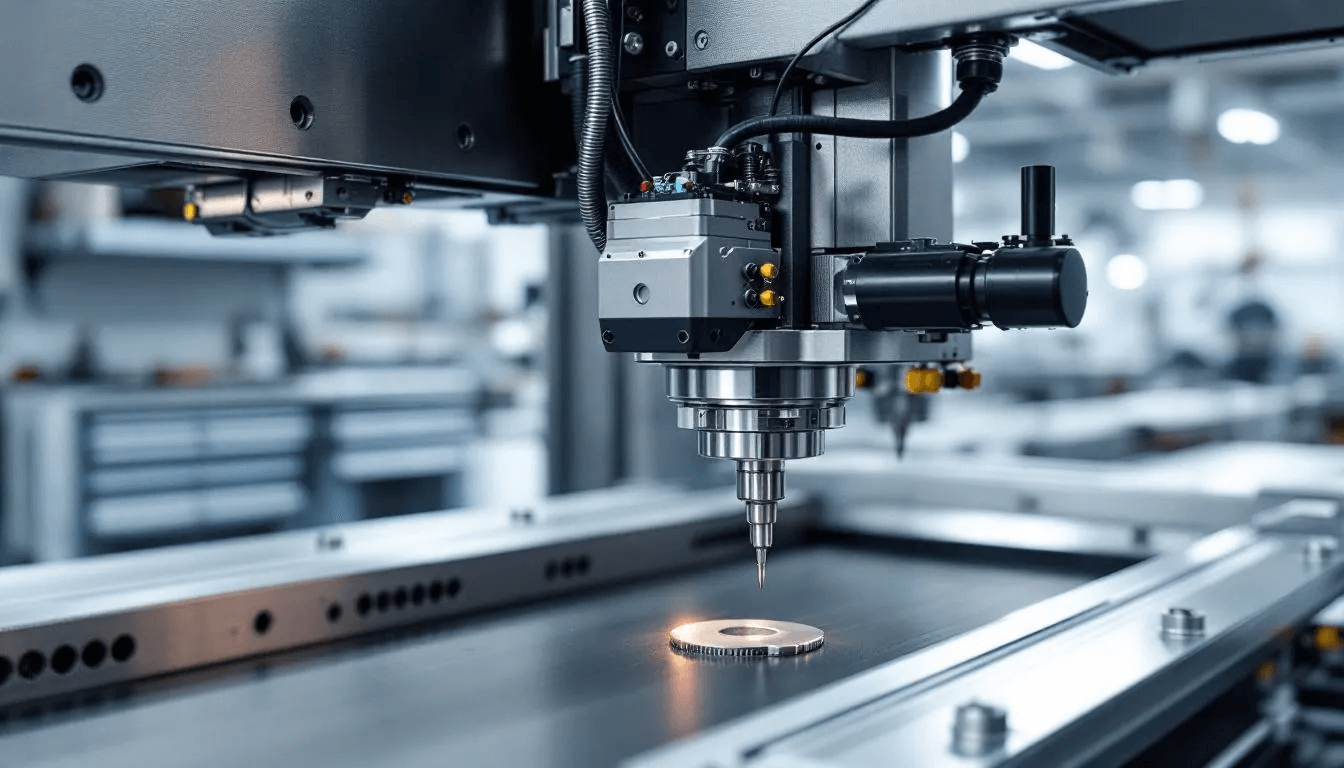
On machine probing systems form the foundation of adaptive manufacturing by providing real-time measurement capabilities directly within the machining environment. These sophisticated sensor networks eliminate the need for external inspection, enabling immediate feedback and process adjustment. Dimensional metrology captures real-time data during the machining process for adaptive control, ensuring precision and consistency throughout production. Touch probes can verify part dimensions, detect setup errors, and monitor machining progress without removing components from their fixtures.
Sensor integration extends beyond simple dimensional measurement to encompass comprehensive process monitoring. Force sensors detect cutting load variations that indicate tool wear or material property changes. Vibration monitors identify developing chatter conditions before they affect surface quality. Temperature sensors track thermal effects that could impact dimensional accuracy. This combination of measurement systems creates a complete picture of machining conditions in real time.
Machine learning algorithms analyze the vast amount of data generated by these sensor networks to identify patterns and optimize process parameters automatically. These systems learn from each machining operation, continuously improving their ability to predict optimal cutting conditions and compensate for process variations. The software can recognize the signatures of specific problems - tool breakage, material inconsistencies, or fixture movement - and respond with appropriate parameter adjustments.
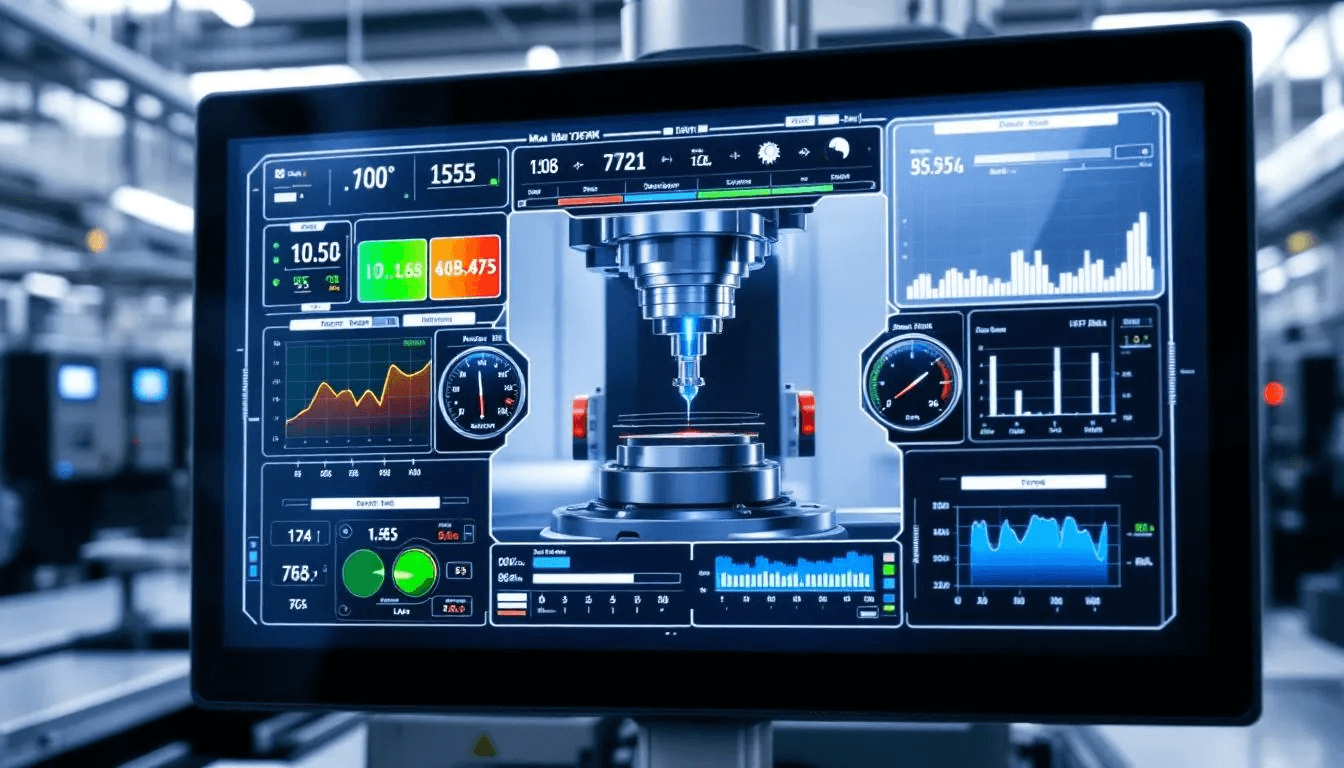
Closed-loop control systems link measurement data directly to NC program modifications, creating true adaptive behavior. When sensors detect conditions outside acceptable ranges, the control system automatically adjusts feed rates, spindle speeds, or toolpaths to maintain quality. This real time feedback eliminates the delays associated with manual inspection and adjustment cycles.
Integration with CAD/CAM software enables dynamic toolpath generation based on actual measured geometry rather than theoretical models. The system can modify cutting paths to accommodate workpiece variations, optimize material removal strategies, and adjust finishing passes to achieve specified surface quality.
Tool Length and Diameter Compensation Methods
Automatic tool measurement systems provide precise length offset calculation without manual intervention. These systems typically employ laser measurement or touch probe verification to determine exact tool dimensions before and during machining operations. Using adaptive roughing often leads to reduced maintenance and refurbishment costs of cutting tools, as the optimized cutting conditions minimize wear and extend tool life. The capability to measure tools automatically reduces setup time while ensuring accurate compensation for tool length variations.
Dynamic diameter compensation adjusts for tool wear during extended machining operations. As cutting tools gradually wear, their effective diameter changes, potentially affecting dimensional accuracy and surface finish. Adaptive systems monitor tool condition through force feedback, dimensional measurements, or direct tool inspection to calculate appropriate compensation values.
Real-time tool breakage detection and compensation strategies protect both workpieces and machines from damage. Sudden changes in cutting forces, vibration patterns, or spindle current can indicate tool failure. When breakage is detected, the system immediately stops machining, alerts operators, and can automatically select replacement tools to continue production.
Implementation of tool wear models enables predictive compensation based on historical data and current cutting conditions. These models consider factors like material properties, cutting parameters, and accumulated cutting time to predict when compensation adjustments will be necessary. This proactive approach maintains consistent quality throughout tool life cycles.
Workpiece Positioning and Alignment Systems
Automated work coordinate system establishment using touch probes eliminates manual setup procedures and reduces the potential for human error. The probing system automatically locates part features, establishes coordinate systems, and verifies proper workpiece alignment before machining begins. This capability is particularly valuable when processing castings or forgings with significant geometric variation.
3D part scanning provides comprehensive geometry verification for complex components. Advanced probing routines can map entire workpiece surfaces, comparing actual geometry to CAD models and generating compensation data for subsequent machining operations. This scanning capability enables adaptive processing of components that would be impossible to machine accurately using traditional fixed-parameter methods.
Fixture-less machining strategies using adaptive positioning represent the ultimate in manufacturing flexibility. By precisely measuring workpiece location and orientation, adaptive systems can generate unique coordinate systems and toolpaths for each component regardless of its exact position in the machine. This capability eliminates the need for expensive, part-specific fixtures while maintaining precision.
Error correction for up to six degrees of freedom positioning variations ensures that components can be processed accurately even when clamped imperfectly. The system measures actual position and orientation, then modifies all subsequent machining operations to compensate for detected deviations. This capability dramatically reduces setup time while maintaining machining accuracy.
Advanced Adaptive Machining Strategies
Adaptive toolpath morphing represents a sophisticated approach to complex surface machining where cutting paths automatically adjust to follow actual workpiece geometry rather than theoretical models. This technique proves particularly valuable when machining components with significant geometric variation, such as investment castings or repaired parts where material distribution varies unpredictably.
Dynamic feed rate optimization based on cutting force feedback maintains consistent material removal rates while protecting tools from excessive loads. The system continuously monitors cutting forces and adjusts feed rates to maintain optimal chip formation and tool life. During roughing operations, this capability enables aggressive material removal in areas with favorable cutting conditions while automatically reducing feed rates when encountering harder materials or difficult geometries.
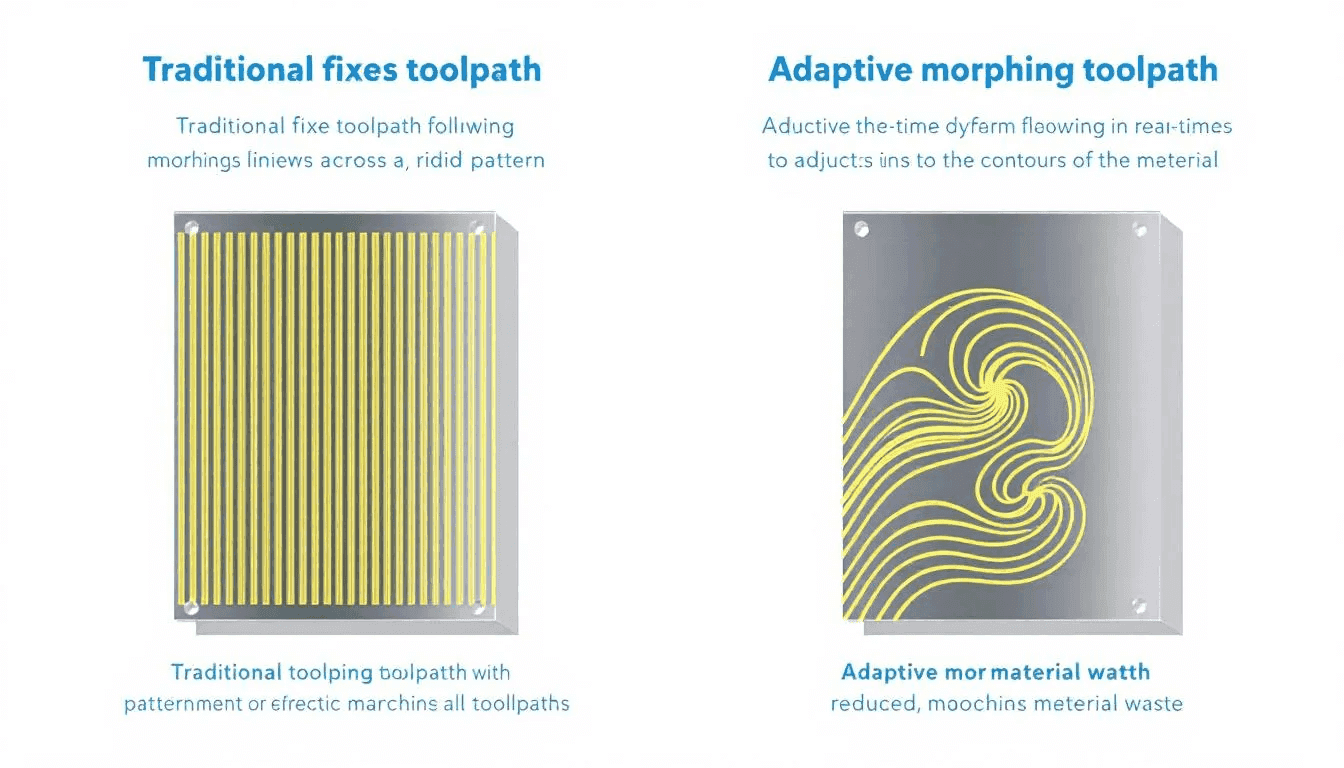
Intelligent roughing strategies maintaining constant material removal rates optimize both productivity and tool life. Rather than using fixed stepover and feed rate values, adaptive systems calculate optimal parameters based on actual material engagement and cutting conditions. Adaptive machining algorithms optimize cutting speed, depth of cut, and cutting direction to maximize productivity and tool life, ensuring consistent chip loads throughout the machining process.
Surface following techniques enable precise machining of variable geometry components where traditional programming methods would be inadequate. The system uses real-time measurement to track surface variations and adjust cutting depths accordingly. Adaptive roughing techniques help produce parts with the required accuracy in precision manufacturing, making them essential for components with varying material thickness or inherent geometric uncertainty.
High-Speed Adaptive Roughing Techniques
Trochoidal machining patterns maintaining consistent chip loads revolutionize rough machining by using curved toolpaths that maintain constant radial engagement. This technique eliminates the variable cutting loads associated with conventional slot milling while enabling higher material removal rates. Adaptive control optimizes the trochoidal parameters based on actual cutting conditions and material properties.
Variable engagement strategies reduce tool stress and vibration by automatically adjusting cutting parameters based on instantaneous tool engagement. When the cutting tool encounters varying depths of cut or changing geometry, the system calculates appropriate feed rate adjustments to maintain consistent chip loads. This approach minimizes tool deflection and chatter while maximizing productivity.
Adaptive stepover calculations based on material properties ensure optimal surface quality and tool life across different materials. The system considers factors like material hardness, thermal conductivity, and machinability to determine ideal stepover distances. Harder materials might require smaller stepovers to maintain surface quality, while softer materials can accommodate larger stepovers for improved productivity.
Heat management through optimized cutting parameter adjustment prevents thermal damage to both workpieces and tools. The system monitors cutting temperatures through direct measurement or indirect indicators like cutting forces and spindle power consumption. When thermal conditions approach critical levels, the system automatically adjusts feed rates, spindle speeds, or implements cooling delays to maintain acceptable temperatures.
Precision Finishing with Adaptive Control
Surface finish optimization through real-time parameter adjustment ensures consistent quality across varying workpiece conditions. The system monitors surface roughness indicators and adjusts cutting parameters to achieve specified finish requirements. This capability proves particularly valuable when transitioning between different materials or when processing parts with varying geometry.
Chatter suppression using adaptive spindle speed variation eliminates vibration-related surface defects before they develop. The system continuously monitors vibration patterns and automatically adjusts spindle speeds to avoid resonant frequencies. When chatter conditions are detected, the system implements speed variations or other parameter changes to restore stable cutting conditions.
Form error correction during finishing operations compensates for geometric deviations detected during machining. The system can adjust toolpaths to correct for deflection, thermal distortion, or other sources of geometric error. This real-time correction capability enables achievement of tight tolerances that would be impossible with fixed-parameter machining.
Dimensional tolerance achievement through closed-loop measurement represents the ultimate in precision manufacturing. The system measures critical dimensions during machining and adjusts subsequent operations to ensure final dimensions fall within specified tolerances. This capability enables production of precision components with minimal variation and reduced inspection requirements.
Technical Implementation Considerations
Hardware requirements for adaptive machining encompass sophisticated sensor systems, high-performance control computers, and robust communication networks. The machine tool must support real-time data acquisition from multiple sensors while maintaining precise motion control. Modern cnc machines designed for adaptive applications feature enhanced computing power and expanded I/O capabilities to support complex sensor integration.
Sensor selection requires careful consideration of measurement requirements, environmental conditions, and system integration needs. Touch probes must provide adequate accuracy and repeatability while withstanding the machine environment. Force sensors need sufficient resolution to detect subtle changes in cutting conditions. Temperature sensors must respond quickly to thermal variations. The combination of sensors creates a comprehensive monitoring system that captures all relevant process variables.
Software integration between CAM systems and machine controllers creates seamless adaptive functionality. The CAM software must generate programs that support real-time modification while maintaining geometric integrity. Machine controllers need the computational power to process sensor data and implement parameter changes without interrupting machining operations. This integration enables true closed-loop adaptive control where measurement data directly influences machining operations.
Network connectivity for Industry 4.0 manufacturing environments enables centralized monitoring and control of multiple adaptive machines. High-speed data networks support real-time transmission of sensor data to centralized analysis systems while enabling remote monitoring and control capabilities. This connectivity supports advanced analytics and machine learning algorithms that improve adaptive performance across entire manufacturing facilities.
Data management systems for process monitoring and analysis require sophisticated databases and analytical tools to handle the vast amounts of information generated by adaptive machining systems. These systems must capture process data, store it efficiently, and provide analytical tools that enable continuous improvement. Machine learning algorithms analyze historical data to identify optimization opportunities and predict maintenance requirements.
Cutting Tool Optimization for Adaptive Processes
Tool geometry selection for variable engagement machining requires cutting tools designed to handle changing cutting conditions effectively. Variable helix tools reduce chatter tendency during adaptive operations. Unequal spacing geometries minimize vibration when cutting parameters change dynamically. Tool manufacturers now offer specialized geometries optimized for adaptive machining applications.
Coating technologies enhance tool performance in adaptive operations by providing consistent cutting characteristics across varying conditions. Advanced coatings maintain their properties through temperature fluctuations and varying cutting loads. Some coatings provide lubricity that reduces cutting forces while others offer thermal barriers that protect tool substrates from heat damage.
Tool life prediction models enable proactive maintenance scheduling based on actual cutting conditions rather than conservative time-based estimates. These models consider cutting parameters, material properties, and accumulated cutting time to predict when tools will require replacement. Adaptive systems can automatically schedule tool changes to minimize production disruptions.
Chip evacuation strategies become critical in high-material-removal adaptive applications where cutting rates vary dynamically. Flood coolant systems must adapt to changing cutting conditions while maintaining effective chip removal. High-pressure coolant delivery enables aggressive cutting parameters while protecting tool edges from heat damage. Some systems automatically adjust coolant flow rates based on instantaneous cutting conditions.
Chip Load Management and Calculation Methods
Radial chip thinning effects require careful compensation to maintain consistent cutting conditions during adaptive toolpath execution. When tools follow curved paths or encounter varying radial engagement, the actual chip thickness differs from programmed feed per tooth values. Adaptive systems calculate these effects in real time and adjust feed rates to maintain optimal chip formation.
The radial chip thinning factor can be calculated using the formula: RCTF = sqrt(Radial Depth of Cut / Tool Diameter). This factor multiplies the programmed feed rate to maintain consistent chip loads during trochoidal or adaptive toolpaths. Understanding these relationships enables programmers to optimize adaptive machining strategies.
Axial chip thinning calculations optimize surface finish during finishing operations where axial engagement varies. Similar to radial effects, axial chip thinning occurs when tools machine at varying depths of cut. The axial chip thinning factor helps maintain consistent surface finish by adjusting feed rates based on actual axial engagement.
Feed rate adjustment algorithms process multiple variables simultaneously to calculate optimal cutting parameters. These algorithms consider radial engagement, axial engagement, tool geometry, material properties, and desired surface finish to determine appropriate feed rates. Real-time calculation enables instantaneous parameter optimization as cutting conditions change.
Real-time calculation examples demonstrate how these principles apply in practice. When machining a pocket with varying depths, the system continuously calculates engagement conditions and adjusts feed rates accordingly. A 20mm diameter end mill machining at 2mm radial depth of cut would utilize an RCTF of sqrt(2/20) = 0.316, requiring a feed rate increase of approximately 3.16 times to maintain consistent chip loads.
Industry Applications and Case Studies
Aerospace component manufacturing represents one of the most demanding applications for adaptive machining techniques. Turbine blade production exemplifies the technology’s capability to handle complex geometries with tight tolerances. Each blade requires unique toolpaths to accommodate casting variations while maintaining aerodynamic profiles critical for engine performance.
A leading aerospace manufacturer implemented adaptive 5-axis machining for turbine blade production, achieving 35% reduction in cycle times while improving dimensional accuracy by 40%. The system automatically adjusts toolpaths based on actual blade geometry measured through on-machine probing. This capability eliminated manual programming for each individual blade while ensuring consistent quality across production runs.
Automotive engine block production benefits significantly from adaptive boring operations that maintain cylinder bore tolerances despite casting variations. Traditional machining often required multiple setups and manual adjustments to achieve acceptable quality. Adaptive systems measure actual bore locations and automatically adjust cutting parameters to maintain specified tolerances.
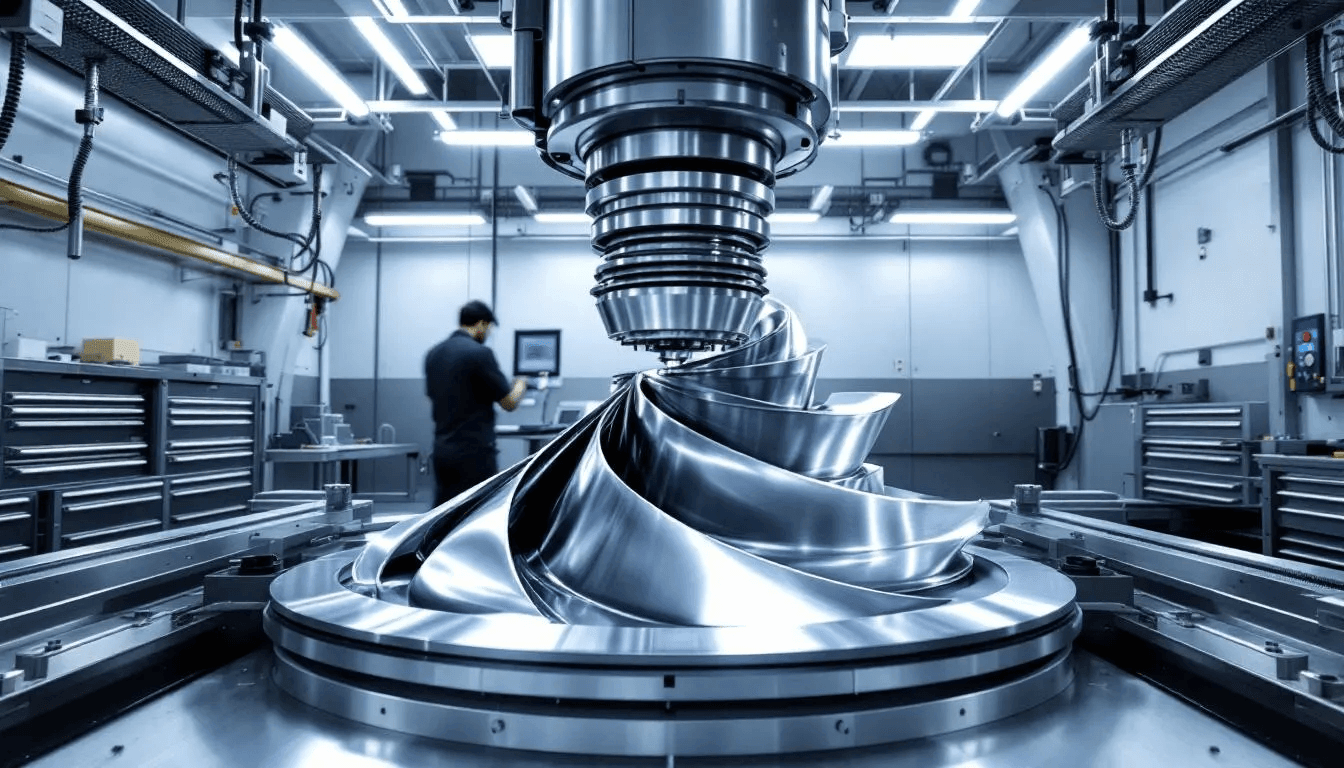
A major automotive manufacturer reported 50% reduction in scrap rates after implementing adaptive boring techniques for engine block production. The system compensates for casting variations automatically, eliminating the need for manual inspection and adjustment cycles. Tool life increased by 25% due to optimized cutting conditions that adapt to material property variations.
Medical implant manufacturing requires precise surface finish control to ensure biocompatibility and proper function. Adaptive machining enables consistent surface quality across different titanium alloy properties while maintaining tight dimensional tolerances. The technology’s precision capabilities prove essential for components where dimensional errors could compromise patient safety.
Mold and die applications benefit from adaptive roughing strategies that optimize material removal while protecting expensive tooling. These applications often involve machining hardened steels where tool costs are significant. Adaptive roughing can reduce machining times by up to 50% compared to traditional methods, making it a highly efficient approach for these demanding tasks.
ROI analysis from implementations across these industries shows consistent productivity improvements and cost reductions. Initial investments in adaptive machining technology typically achieve payback within 18-24 months through reduced scrap, improved tool life, and increased throughput. The combination of quality improvements and productivity gains creates compelling business cases for adaptive technology adoption.
Manufacturing companies report additional benefits including reduced operator skill requirements, improved consistency across shifts, and enhanced capability to accept challenging work. The technology’s ability to process difficult geometries and materials often enables manufacturers to pursue higher-value contracts that were previously uneconomical.
Future Trends and Development Directions
Artificial intelligence integration promises to revolutionize adaptive machining through autonomous process optimization that learns from every machining operation. Advanced machine learning algorithms will analyze vast amounts of process data to identify subtle patterns and relationships that human programmers might miss. These systems will continuously improve their optimization strategies, potentially achieving performance levels beyond current capabilities.
Future AI systems will predict optimal cutting parameters before machining begins, utilizing historical data from similar components and real-time material property assessment. This predictive capability will minimize the learning curve for new parts while maximizing first-part quality. The technology will also enable autonomous problem-solving when unexpected conditions arise during production.
Digital twin technology enables virtual adaptive machining simulation that mirrors real-world processes in digital environments. These sophisticated models incorporate physics-based simulation of cutting forces, thermal effects, and tool wear to predict machining outcomes before physical production begins. Digital twins will enable virtual optimization of adaptive strategies, reducing development time and improving process reliability.

Cloud-based adaptive control systems will coordinate multiple machines across global manufacturing networks, sharing optimization data and learning from distributed production experiences. This connectivity will enable smaller manufacturers to access advanced adaptive capabilities without significant local infrastructure investments. Cloud computing will also support more sophisticated analytics and machine learning algorithms than individual machines could support locally.
Predictive maintenance integration with adaptive machining systems will prevent equipment failures while optimizing production schedules. These systems will monitor machine condition through the same sensors used for process control, identifying developing problems before they affect production quality. Maintenance scheduling will become dynamic, based on actual machine condition rather than fixed time intervals.
Sustainability benefits through optimized material usage and energy consumption align with growing environmental concerns across manufacturing industries. Adaptive machining reduces waste by eliminating scrap and rework while optimizing cutting parameters for energy efficiency. Future developments will focus on minimizing environmental impact while maintaining productivity and quality objectives.
The technology will evolve toward complete lights-out manufacturing where entire production cells operate autonomously with minimal human intervention. Advanced adaptive systems will handle material loading, tool management, quality inspection, and part handling automatically. This evolution will require seamless integration between adaptive machining, robotics, and factory automation systems, as discussed in the future of manufacturing by industry experts.
Adaptive machining represents a fundamental transformation in manufacturing technology that enables unprecedented levels of precision, efficiency, and flexibility. The convergence of advanced sensors, machine learning, and control systems creates manufacturing processes that continuously optimize themselves while reducing waste and operator dependency.
The technology’s impact extends beyond individual machines to encompass entire manufacturing strategies. Companies implementing adaptive machining report not only improved productivity and quality but also enhanced capability to pursue challenging work that competitors cannot economically produce. This competitive advantage becomes increasingly important as manufacturing trends toward customization and shorter product lifecycles.
Success with adaptive machining requires careful planning, appropriate technology selection, and commitment to process improvement. Manufacturers must invest in both hardware and expertise while recognizing that full benefits may take time to realize. However, early adopters consistently report that adaptive machining provides competitive advantages that justify the investment required for implementation.
The future promises even greater integration between adaptive machining, artificial intelligence, and digital manufacturing systems. As these technologies mature and become more accessible, adaptive machining will likely become standard practice rather than advanced technology. Manufacturers who begin implementing adaptive techniques now will be better positioned to capitalize on future developments while building the expertise necessary for continued success.