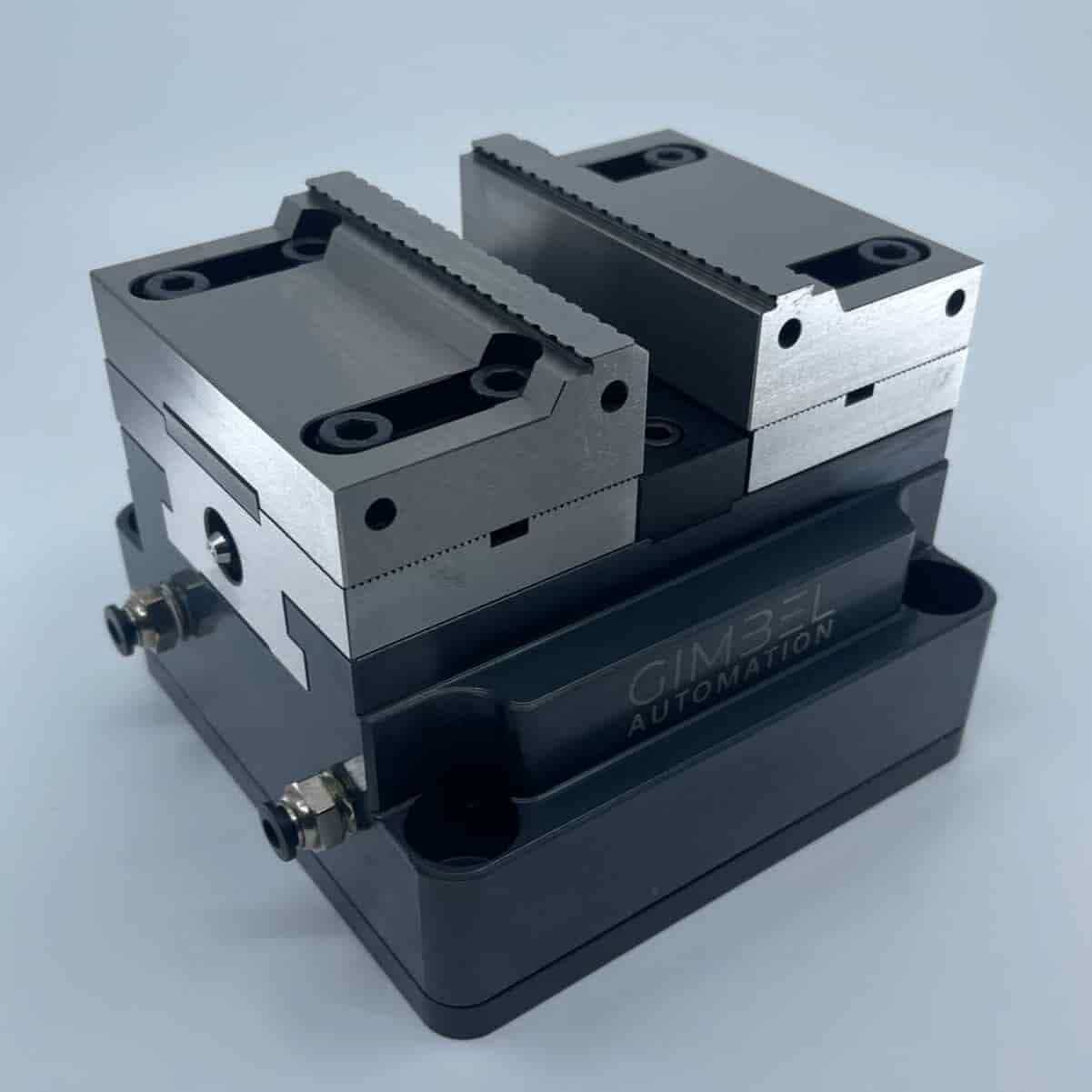





In the demanding world of CNC machining, where every second counts toward flawless output, the flip station stands as a cornerstone of efficiency. At Gimbel Automation, we've engineered our flip station to transform how shops handle complex part flipping, ensuring seamless transitions between machining operations. This system not only boosts throughput but also minimizes downtime, allowing operators to focus on high-value tasks. Different types of part flipping stations exist to suit various robotic systems and payloads, ensuring compatibility with diverse setups. Flexfactory AG supplies flexible, programmable bulk parts feeders that can be used with commercially available robots, further enhancing automation possibilities. If you're ready to elevate your CNC setup, booking a demo with us reveals how this flipper integrates effortlessly into your workflow.
The Core Mechanics of a Flip Station
A flip station, often called a flipping station, is a specialized apparatus designed to rotate and reposition parts during CNC processes. At its heart, it automates the flip of workpieces, enabling access to multiple sides without halting production lines. Imagine a robust frame that securely holds parts via precision mounts, then executes a controlled 180-degree flip using pneumatic or hydraulic actuators. The CNC Flip Station typically grips the part firmly, turns it over 180°, and releases the part in its new orientation. This isn't just about turning components; it's about precision engineering that aligns every flip with sub-micron accuracy.
Flip items, in this context, refer to those intricate parts—think aerospace fittings or automotive shafts—that demand machining on both ends or faces. Without a dedicated part flipping station, operators risk misalignment or surface damage from manual handling. Our flip station addresses this by incorporating solenoid-driven clamps that grip and release with repeatable force, ensuring parts remain stable throughout the flip. Vacuum cups are commonly used in part flipping automation to secure components during flipping, adding another layer of precision and reliability. Specifications subject to your application's needs, but standard models handle loads up to 500 pounds, with cycle times under 10 seconds.
What sets a true flip rotate apart? It's the synchronized rotation mechanism, where the flipper combines linear motion with angular displacement. This flip rotate function allows for not just binary flips but adjustable angles, ideal for helical or tapered features. In practice, the system mounts directly to your CNC lathe or mill, with modular bases that adapt to varying spindle heights. The FlipVac UNO CNC Part Flip Station is designed to enable Cobots to flip CNC machined parts for the next operation, further enhancing automation capabilities. We've seen shops cut setup time by 40% simply by swapping in these mounts, turning what was a bottleneck into a streamlined operation.
Specifications and Customization for Optimal Flipping
Diving into the details, a complete flip station includes a base cart for mobility, heavy-duty solenoids for actuation, and integrated sensors for position feedback. Prices vary based on capacity—entry-level units start around $15,000, scaling to $50,000 for high-volume setups with advanced flip rotate capabilities. Notice how specifications subject to material types; for instance, steel parts require reinforced mounts, while aluminum benefits from lighter, faster solenoids. The FlipVac can be mounted to T-slot aluminum extrusion tables or use an optional base plate for non T-slot tables, offering flexibility in installation.
The actual product appearance is industrial-grade: powder-coated steel frames in gray or custom colors, with ergonomic controls mounted at waist height for operator ease. Flipping operations are PLC-controlled, allowing integration with existing CNC software for automated sequences. One unique insight from our engineering team: incorporating vibration-dampening elastomers in the flipper arms reduces harmonic resonance during high-speed flips, preventing micro-cracks in sensitive parts. The FlipVac features a rigid design and includes multiple vacuum cup configurations for different applications, ensuring adaptability to a wide range of tasks. This isn't an afterthought—it's a proactive design choice that extends tool life by up to 25%.
Customization shines here. Whether your flipping station needs to handle batch runs of 100 parts or single prototypes, we tailor the system to differ only in scale, not in core reliability. Included accessories like quick-change collets and safety interlocks ensure compliance with ISO standards, while optional carts enable easy relocation across shop floors.
Real-World Applications and Performance Gains
In CNC environments, the part flipping station excels in applications from medical device manufacturing to heavy machinery components. Parts that once required dual setups now flip seamlessly mid-cycle, with the flipper executing precise rotations to expose hidden surfaces. We've deployed these systems in shops producing hydraulic fittings, where flipping 2-inch diameter parts at 60 cycles per hour slashed labor costs by half. Similarly, in competitive fitness races like HYROX, tire flips may test strength, coordination, and pace over a certain distance, showcasing the versatility of flipping mechanisms across industries.
Quality remains paramount; our flip stations incorporate non-marking jaws that preserve surface finishes down to Ra 0.8 microns. To improve throughput further, pair it with automated loading arms—avoiding the common pitfall of inconsistent part presentation. Pro Tip: For high-mix production, program variable flip angles via the HMI; this adaptability turns your flipping station into a versatile asset, not a one-trick pony.
One challenge with traditional flippers is thermal expansion in long runs, but our designs use compensated alloys to maintain tolerances. What could be a con—initial integration complexity—becomes an opportunity: our on-site tuning ensures zero downtime during install, often yielding ROI in under six months.
As you consider upgrading your CNC line, remember that the right flipping station doesn't just move parts; it redefines your operation's potential. At Gimbel Automation, we're committed to delivering flippers that drive measurable gains—book a demo today to see our latest models in action and discuss specs tailored to your needs. Let's flip the script on your production challenges together.