


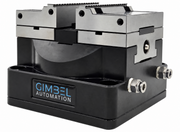


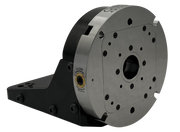


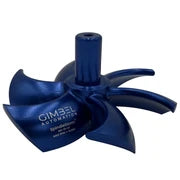

A parallel jaw gripper is a mechanical device that grips a part between two jaws that move in parallel, closing and opening in sync to pick, hold, and release it. Most run on compressed air. Some run on electric motors. In automation, the gripper mounts to a robot arm, or in machining, it can mount directly in a CNC spindle. The design is simple, accurate, and the most widely used gripper type in industry.
That last point carries more weight than it first appears. Simple survives on a shop floor. Fewer moving parts means fewer failures, quicker setup, and less to chase down during an unattended run. Below we cover how these grippers work, the types worth knowing, the specs that actually decide a purchase, and one route most guides leave out: using the CNC spindle you already own instead of buying a robot arm.
What is a parallel jaw gripper?
A parallel jaw gripper holds a part with two opposing jaws that travel in a straight line toward each other. Both jaws move together, so the part settles on the same centerline every cycle. That repeatable centering is the reason parallel designs dominate pick-and-place, assembly, and machine tending.
Two traits make them the default. The motion runs on a single axis, which keeps mounting and programming clean. And flat jaws hold flat or square stock with even pressure, tolerating small size variation without new tooling. When people say "gripper" without qualifying it, this is almost always the one they mean.
The mechanism is easy to picture. The harder question is how it actually generates and holds force.

How does a parallel jaw gripper work?
A parallel jaw gripper works by driving a piston or a motor that pushes the two jaws open or closed through a linkage, wedge, or gear. On an air gripper, compressed air moves the piston. Grip force rises and falls with air pressure up to the gripper's rated maximum, so a simple regulator lets you tune clamping force to the part. Raise the pressure and you raise the force, within the rated ceiling.
Three numbers describe the working envelope. Stroke is how far each jaw travels, which sets the range of part sizes you can hold. Grip force is the clamping load at a given pressure. Repeatability is how precisely the part returns to the same position each time. The jaws themselves are tooling, and most shops swap or machine custom fingers to match the part profile.
One detail decides whether the design is safe for unattended work. If air is lost, a basic gripper relaxes and the part can fall. Grippers built for lights-out running add spring assist or a mechanical self-lock that holds the part through a pressure drop. If you plan to run without an operator watching, treat that feature as a requirement, not an upgrade.
Knowing how one works is step one. Choosing well means knowing the types.
Parallel jaw gripper types
Parallel jaw grippers split two ways: by how they are powered, and by how the jaws are arranged. Drive types are pneumatic, electric, and pneumatic with IO-Link feedback. Jaw layouts are two-jaw or three-jaw, and the jaws move either in parallel or at an angle. Most CNC work lands on pneumatic, two-jaw, parallel-motion units for one reason: they are cheap, fast, and forgiving.
Pneumatic grippers (air grippers)
An air gripper uses compressed air to drive the jaws. It is fast, strong for its size, mechanically simple, and inexpensive to buy and run. The tradeoff is that it needs a compressed air supply and, on its own, offers limited feedback about jaw position. For high-speed and high-force handling, it remains the workhorse.
On a CNC machine, the air can reach the gripper two ways, and both actuate the same jaws. Through-spindle air is the direct route when the machine is plumbed for it. When it is not, the same jaw design runs off the machine's coolant line instead, so a shop with standard through-spindle coolant automates without adding an air system. That coolant-actuated option is rare in the wider gripper market and useful in machining, where coolant is already at the spindle. Our pneumatic grippers come in both air-driven and coolant-driven versions so the choice follows how your machine is already set up, not the other way around.
Electric grippers
An electric gripper drives the jaws with a motor. You get programmable grip force, controllable jaw position, and detailed feedback, with no air line required. You pay more per unit, and integration takes longer. Electric makes sense when the part is delicate, the force must be exact, or air simply is not available. For the full tradeoff, see pneumatic vs electric grippers.
Pneumatic-intelligent (IO-Link) grippers
These pair an air gripper with a smart interface that adds position sensing and monitoring. In practice, that can cut cycle time and reduce air consumption compared with a plain valve-driven gripper. They sit between simple pneumatic and full electric on both capability and cost.
Two-jaw vs three-jaw
A two-jaw gripper is the common choice. It handles flat and square parts well and is the easiest to tool and program. A three-jaw, or concentric, gripper centers round parts more accurately because three contact points close evenly on the diameter. Pick by part shape first.

Parallel vs angular motion
Parallel jaws stay square to the part and fit into tight spaces, which is why they are used to pull parts down into a machine where room is limited. Angular jaws swing open around a pivot, which clears the tooling out of the way when access matters more than a compact footprint. Angular units are often cheaper, but the sweeping motion is harder to design around.
Every option above shares one hidden assumption. It assumes the gripper hangs off a robot arm. For a CNC shop, that assumption is worth challenging.
Parallel jaw robotic grippers vs the CNC spindle-gripper approach
A parallel jaw robotic gripper is the same gripper mounted on a robot or cobot arm. That is how nearly every guide frames it, and for many plants it is the right answer. For CNC machine shops, there is a second route that costs far less: mount the gripper in the machine's spindle and let the CNC itself move the part. No external arm. The machine becomes its own loader.
The math is what makes this worth a hard look. A cobot arm alone typically starts near $30,000 before tooling, integration, and the floor space it occupies. A spindle-mounted approach skips the arm entirely. It installs into the machine's automatic tool changer like any other tool, so the existing axes handle the motion you would otherwise pay a robot to perform. In our experience with small shops, the arm is the most expensive and most disruptive part of the cell, and it is the part a spindle gripper removes.
Here is the honest limitation, because it matters. A spindle gripper works when the machine can supply actuation, usually through-spindle air or coolant, or an external bypass block that feeds air to the tool. It also suits part transfer inside the machine, such as moving stock into a vise for the first operation and back out when finished. It is not a general-purpose factory robot. If your job needs a part carried across a room or fed to three machines, an arm is the better tool.
| Question | Robot-arm gripper | Spindle gripper (in-machine) |
|---|---|---|
| What moves the part | External robot or cobot arm | The CNC's own spindle and axes |
| Typical entry cost | Arm from ~$30k, plus tooling and integration | Complete vise-and-gripper cell from around $3,100 |
| Floor space | Dedicated cell footprint | None added, it lives in the machine |
| Integration effort | Robot programming and safety review | Installs in the tool changer, triggered by M-code |
| Best fit | Multi-machine or out-of-machine handling | Single-machine load, unload, and two-op transfer |
For most small and mid-size shops running one machine at a time, the spindle route reaches unattended production faster and for a fraction of the capital. Our parallel grippers are built around exactly this idea, and the spindle gripper overview walks through how the machine loads its own parts. Whichever route fits, the buying decision still comes down to specs.
Key specs to compare before you buy
The specs that decide a parallel jaw gripper are grip force, stroke, repeatability, payload, jaw material, and how it mounts and triggers. For CNC work, add coolant and chip tolerance, because a gripper that jams on chips is worse than no automation at all.
| Spec | What it tells you | CNC shop lens |
|---|---|---|
| Grip / clamping force | Clamping load at rated pressure | Enough to hold the part through motion, not so much it marks it |
| Stroke | Jaw travel range | Sets the spread of part sizes one setup can hold |
| Repeatability | How precisely the part returns each cycle | Tighter is better for downstream ops; sub-thousandth is achievable |
| Payload | Max part weight | Match to your heaviest raw blank, with margin |
| Jaw / body material | Aluminum body, hardened steel jaws typical | Hardened jaws last; check finger swap options |
| Mounting interface | Robot flange vs spindle shank | A shank that fits the tool changer skips arm integration |
| Actuation and trigger | Air, coolant, or electric; how it fires | M-code control ties it into the program you already run |

A quick anchor from our own line: the through-spindle air gripper we build holds around 0.001 inch repeatability, grips parts up to 10 pounds, and is rated for up to two million actuations with service around every quarter million cycles. Those are the kinds of numbers to ask any vendor for, in writing, before you commit.
Specs only mean something against a job. So look at where these grippers actually earn their place.
Where parallel jaw grippers earn their keep
Parallel jaw grippers do most of their work in machine tending, assembly, and packaging. In machining specifically, they load raw stock, transfer parts between operations, and unload finished parts so the spindle keeps cutting instead of waiting on a person.
The clearest example is two-operation work. The gripper pulls a blank from a tray and loads it into the first-operation vise. The machine cuts. The part is flipped, regripped, and set into the second-operation vise for the remaining features. The cycle repeats through a full tray, and the machine runs unattended long after the operator has gone home. That is the core of lights-out production, and it is where in-machine grippers shine because there is no arm to reset or reprogram between parts.
Outside machining, the same jaws sort, pack, and place across countless lines. The principle never changes: even pressure, repeatable centering, simple motion. Getting the choice right starts with a short set of questions.
How to choose a parallel jaw gripper
Match the gripper to the part first, then to the machine. Part shape sets two-jaw versus three-jaw. Available room inside the machine sets parallel versus angular. Your air supply, and whether you want an external arm at all, sets the larger architecture.
Work through these in order:
- Part shape: flat or square favors two-jaw; round favors three-jaw concentric.
- Space: tight machine interiors favor compact parallel jaws over angular sweep.
- Environment: coolant, chips, and wash-down call for sealed or self-locking designs.
- Retention: for unattended runs, require spring assist or mechanical self-lock on air loss.
- Architecture: if you run a single CNC and want the lowest cost to unattended, price the spindle route before you price a robot cell.
Answer those five and the shortlist writes itself. A few questions still come up on almost every call.
Frequently asked questions
What is the difference between a parallel jaw gripper and a parallel jaw robotic gripper?
None mechanically. A parallel jaw robotic gripper is simply a parallel jaw gripper mounted on a robot or cobot arm. The jaws, force, and motion are identical. The word "robotic" only describes what carries it.
Pneumatic or electric: which is better?
Pneumatic is faster, stronger for its size, and cheaper, and it is the standard choice for CNC and high-speed handling. Electric wins when you need programmable force, exact positioning, or you have no air supply. For most machine shops, pneumatic is the practical pick.
Do I need a robot arm to use a parallel jaw gripper?
No. On a CNC machine you can mount a spindle gripper in the tool changer and let the machine load and unload its own parts. The spindle and axes do the moving, so no separate arm is required. An arm only becomes necessary when parts must be handled outside the machine or across several machines.
How much grip force do I need?
Enough to hold the part securely through the fastest motion in the cycle, with margin, and not so much that it marks or deforms the part. On an air gripper, force scales with pressure up to the rated maximum, so a regulator lets you tune it to the part after install.
Two-jaw or three-jaw?
Use two-jaw for flat and square parts, which covers most machining stock. Use three-jaw concentric for round parts, where three contact points center the diameter more accurately.
What happens if air pressure is lost?
A basic gripper relaxes and the part can drop. Grippers intended for unattended work add spring assist or a mechanical self-lock that holds the part through a pressure loss. Confirm this feature before running lights-out.
Automating a single CNC does not have to start with a robot and a six-figure budget. If your machine has through-spindle air or coolant, the shortest path to unattended production is often the spindle you already own. Explore the CNC gripper systems to see what fits your machine.
Explore AI Summary


