


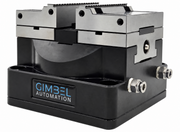






6" (150mm) AutoVise Lite™ - Aluminum Pneumatic CNC Air Vise
✓ In Stock
✓ Ships in 1-3 Business Days
✓ Ships in 10-14 Days
✓ US-Based Support
-
Need Turnkey CNC Automation?
For Turnkeys and Custom Applications, we can help!
- Book a Turnkey Demo
Technical Specs & Downloads
3D CAD Viewer
Email address for CAD Model
Thanks for Submitting!
Your CAD Model will be sent to the email submitted within 1-2 minutes.

Loading 3D
CAD Viewer

Technical Specs
| Technical Specs | |
|---|---|
| Actuation Type | Pneumatic (Air-Powered) |
| Jaw Width | 150mm || 6.0in |
| Jaw Stroke | 6.5mm || 0.26in |
| Repeatability | 0.025mm || 0.001in |
| Clamping Force | 1,229 - 4,310lbf (psi-dependent) |
| Pressure Range | 50 – 140psi |
| Weight | 7 kg || 15.4lbs |


Choose Your AutoVise™ Model
Compare features to find the perfect fit for your workholding needs
AutoVise LT™
6" (150mm)
AutoVise Pro™
3" (75mm)
AutoVise Pro™
4" (100mm)
AutoVise Pro™
6" (150mm)
Description
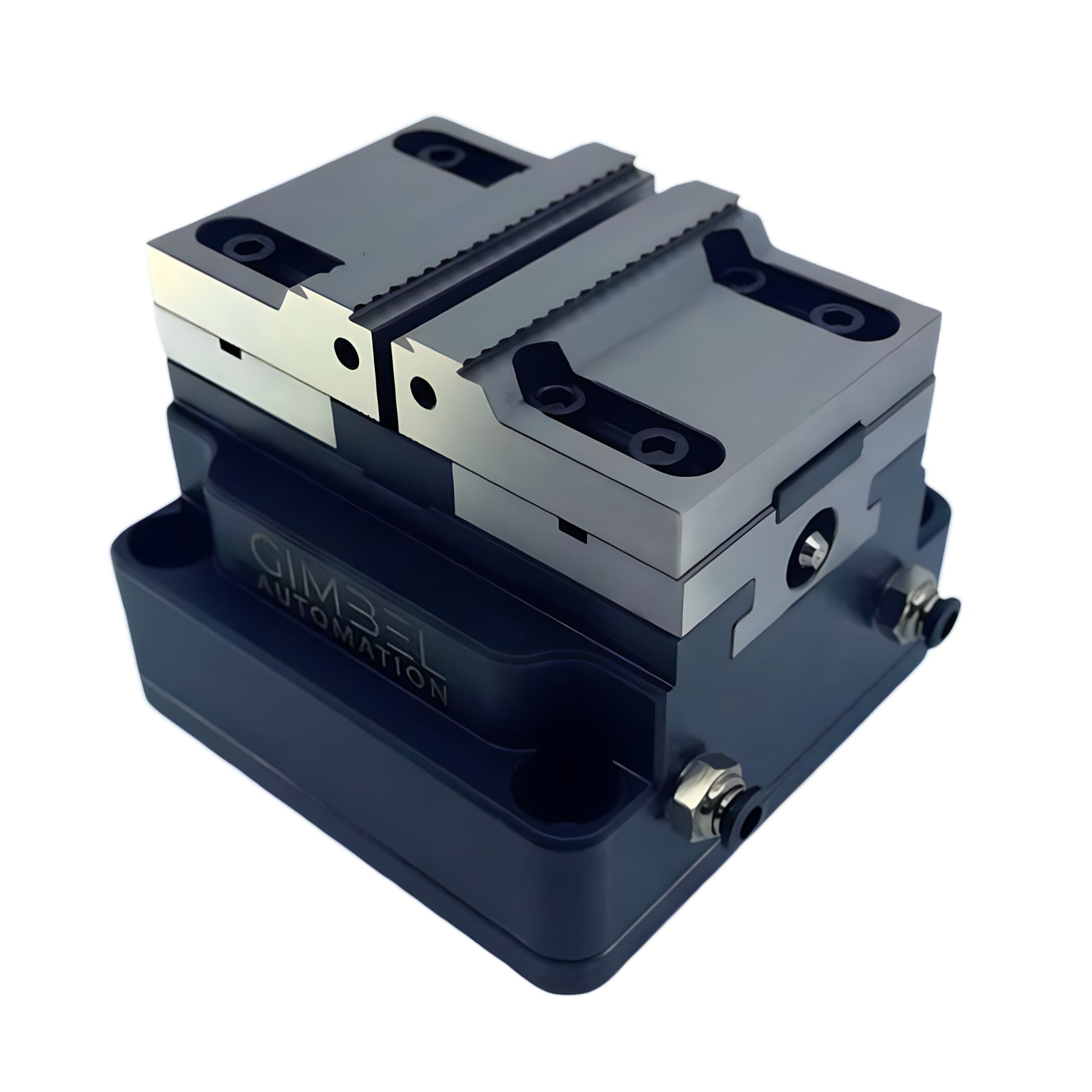
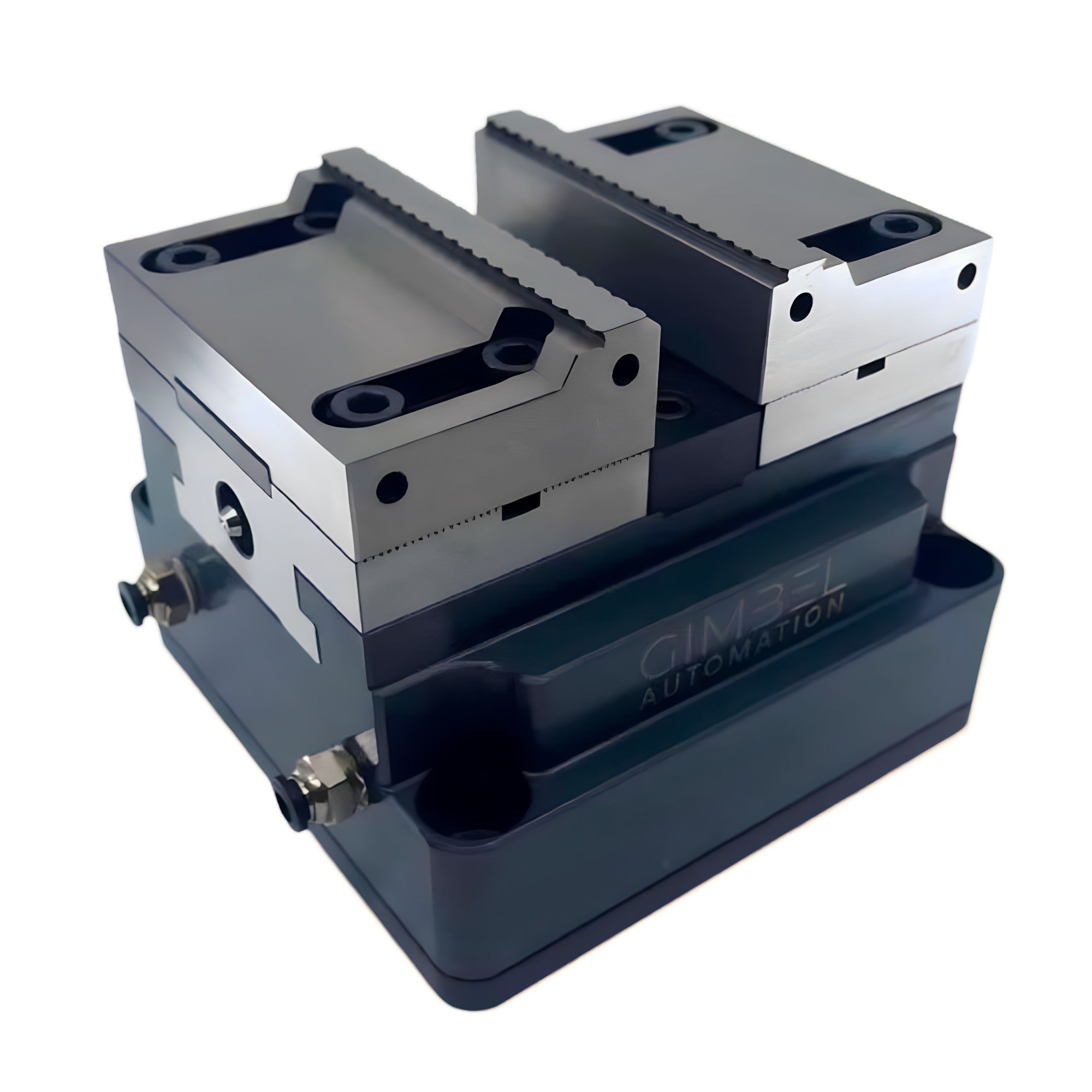
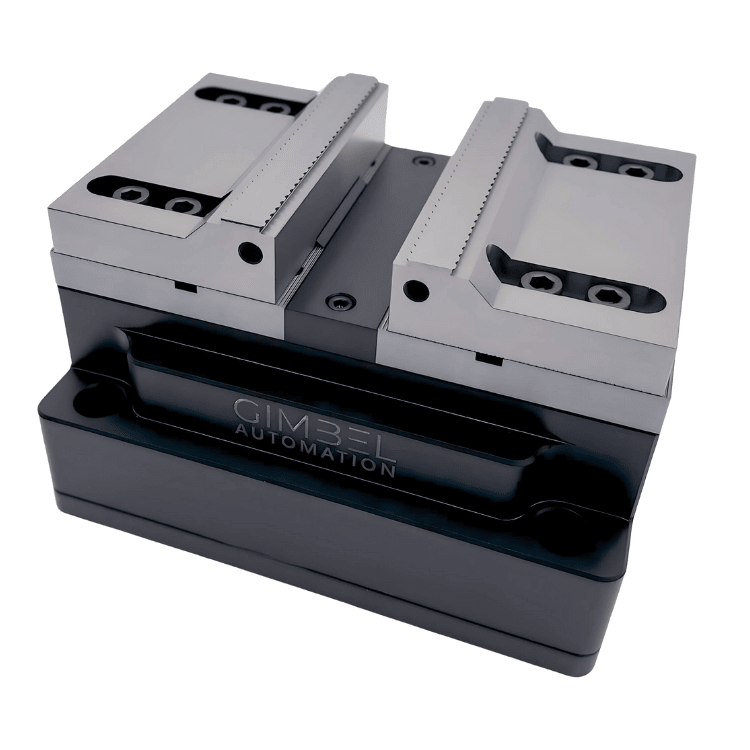
The AutoVise Lite is Gimbel's cost-effective entry into pneumatic self-centering workholding. Built from aluminum for reduced weight and a lower price point, the AutoVise Lite delivers 0.001" rated precision and 6.5mm of total stroke (3.25mm per jaw) in a 150mm clamp-width package. Integrated 52mm and 96mm pull stud patterns on the underside provide direct compatibility with all major zero-point clamping systems, including Lang, Jergens, and 5th Axis, with no additional adapter plates required.
6" (150mm) AutoVise Lite - A Budget-Friendly Path to Pneumatic Automation
The AutoVise Lite is designed for shops that want to step into pneumatic self-centering automation without the upfront cost of a full steel vise. The aluminum construction significantly reduces weight, making it easier to handle during setup and better suited for lighter-duty applications, high-mix environments, and shops running mostly aluminum or softer materials. Self-centering actuation means consistent part placement and repeatable clamping, whether operated manually or through M-code and robotic integration.
Like all AutoVise models, the Lite features adjustable serrated jaws that accommodate a range of part sizes without requiring custom soft jaws for first-op work. The jaws are fully reversible for flexibility across clamping ranges. Integrated springs supplement pneumatic force and act as a failsafe to retain parts in the event of air loss.
Zero-Point Ready Out of the Box
The AutoVise Lite ships with both 52mm and 96mm pull stud bolt patterns machined into the base, so it drops directly onto any standard zero-point chuck or receiver plate. This makes the Lite an ideal choice for shops already running zero-point systems that want a fast-swap pneumatic vise at a fraction of the cost of comparable options.
Key Specifications
- 150mm (6") clamp width
- 0.001" rated precision
- 6.5mm total stroke (3.25mm per jaw)
- Aluminum construction
- Self-centering pneumatic actuation
- Integrated 52mm and 96mm pull stud patterns
- Compatible with Lang, Jergens, and 5th Axis zero-point systems
- Adjustable, reversible serrated jaws included
- Spring-assisted clamping with pneumatic failsafe
Looking for higher precision and heavier-duty construction? Check out our AutoVise Pro line, featuring all-steel and stainless construction, 0.0008" repeatability, and cycle ratings exceeding 250,000 clamps before rebuild.
FAQs
Pneumatic Vises, also known as CNC Pneumatic Vises, Air Vises, or Precision Pneumatic Self Centering Vises, are an automated form of workholding used to hold workpieces during the machining process. The machining process requires precise, repeatable, and incredibly rigid holding capacity to hold a wide variety of parts.
The biggest benefit of Pneumatic CNC Vises is how easy they are to automate. Automated Machine Tending solutions typically already have a wide array of solenoids and air control, so Pneumatic Vises are the go-to choice in CNC Machine Tending Automation systems. In addition to customers using our Pneumatic Self-Centering Air Vises for Spindle Gripper Machine Tending Automation Systems, we also have countless customers using these vises with cobot systems, robot systems, machine cells, and even to streamline manual loading.
These air vises have fully-adjustable clamping force, and are easily adjusted by simply regulating the inlet air supply on the “Clamp” air inlet on the vise. Refer to the Spec-Sheet in the Downloads section of this page for a graph showing how air pressure is linearly correlated with clamping force.
The biggest single advantage of Pneumatic Vises over traditional workholding is how quickly they can be clamped and unclamped. With the flip of a switch, parts can be instantly clamped and unclamped with near-perfect repeatability. Another huge advantage is that, unlike human operators tightening regular vises, Pneumatic Vises clamp with the same clamping force every single cycle.
Gimbel Automation Self-Centering Air Vises have two key differences from other solutions on the market: (1) our Self-Centering Air Vises have an all-steel construction, and (2) the moving top of our air vises is fully serrated, enabling the hard jaws with matching serrations to be adjusted to any size in a few seconds. This means that there is no need for you to buy and machine unique soft jaws for each part you manufacture for your first operation. Instead, use the adjustable hard jaws for your first operation and machine second jaws only for second-op workholding as you need them.


