


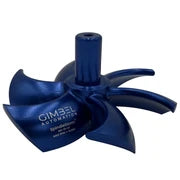


Self-Centering Vises
A self-centering vise clamps a workpiece from both sides at once, holding it on the machine's programmed origin without indicating each load. Our AutoVise line does this on shop air, closing in under a second and repeating to 0.0008 inch. Pick a size below, from 75mm to 150mm, or scroll for how the mechanism works and where it fits.
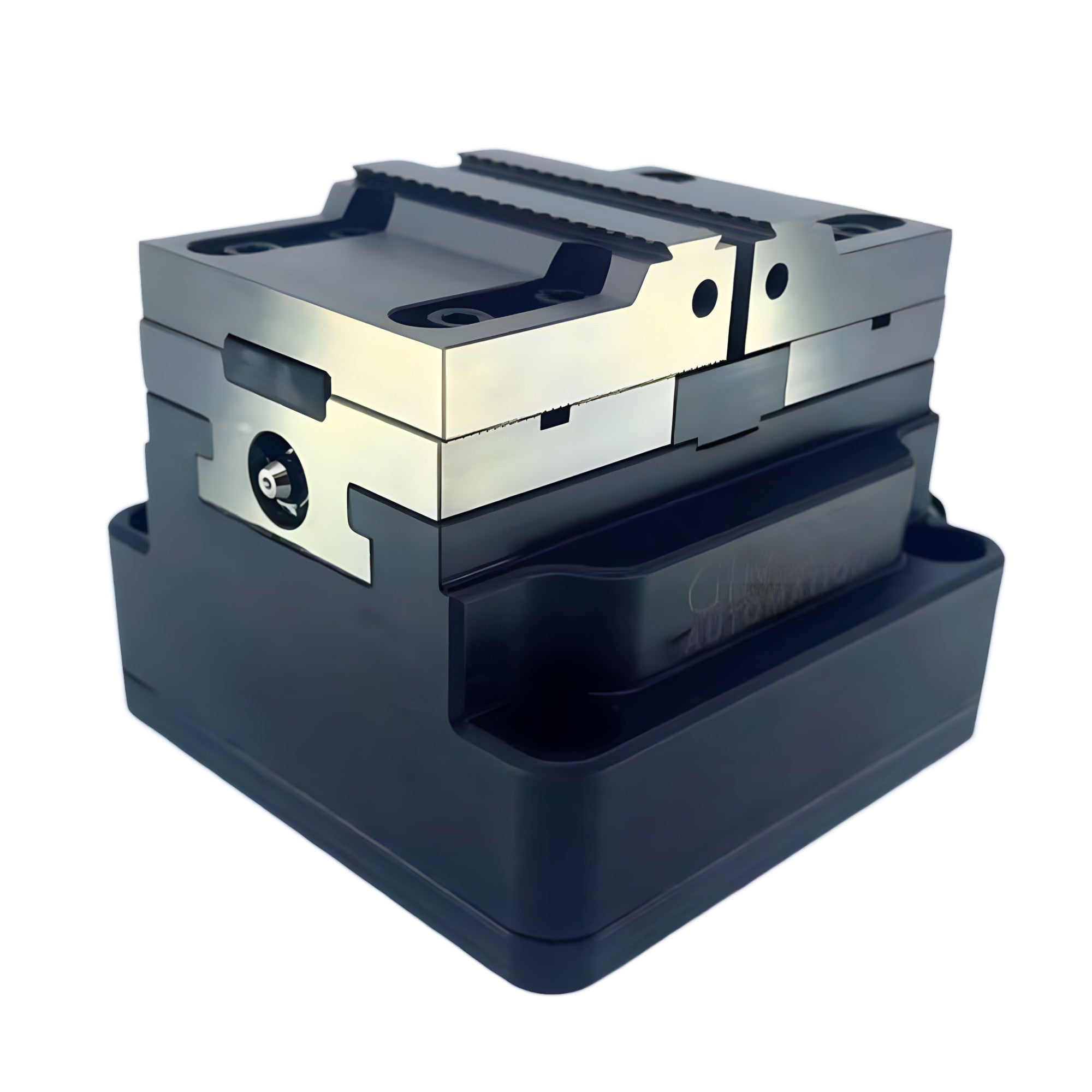
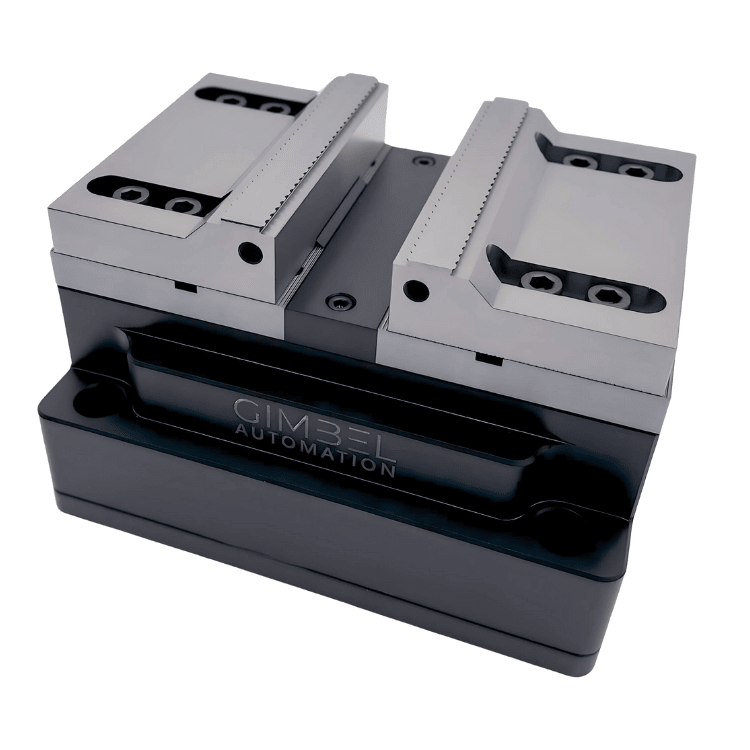
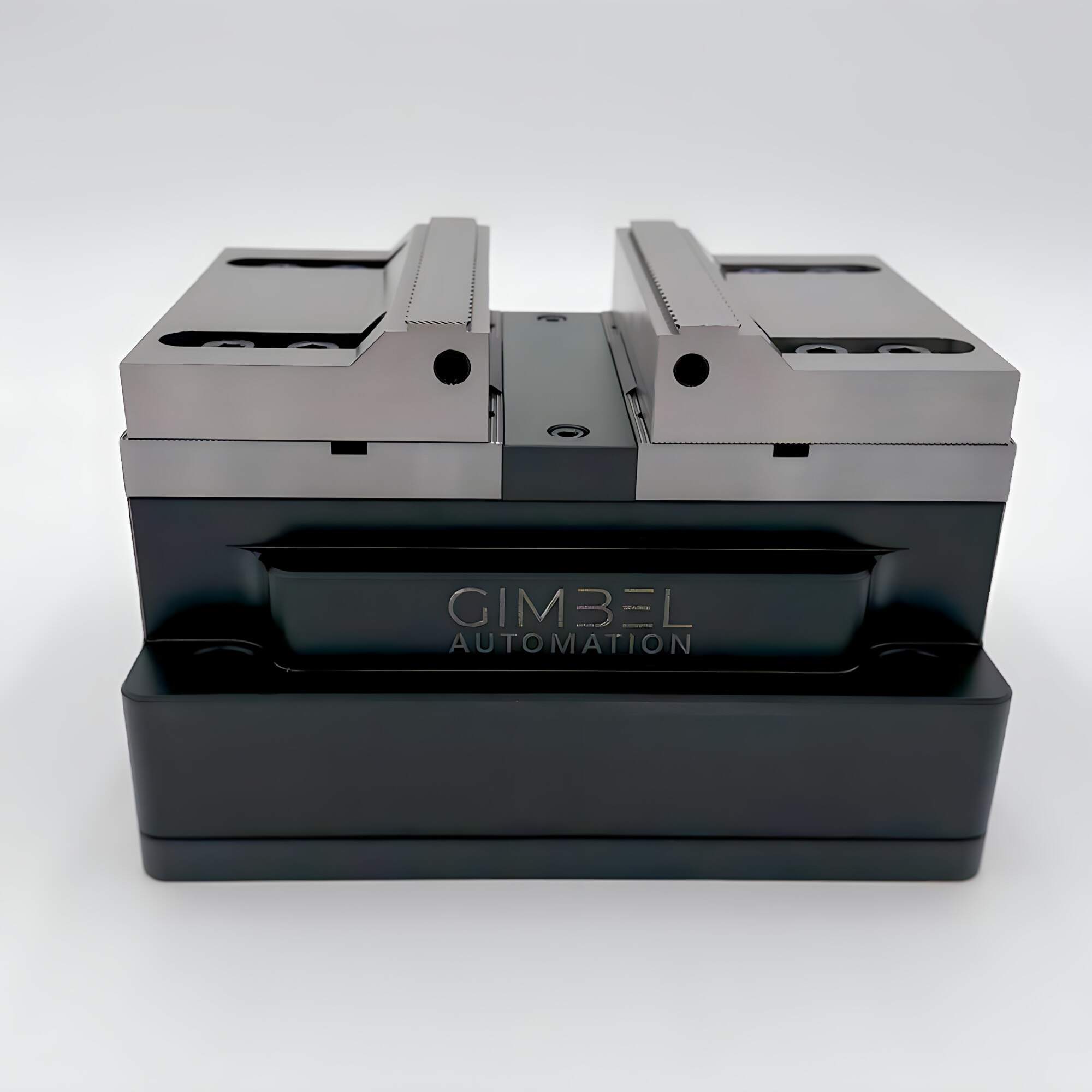


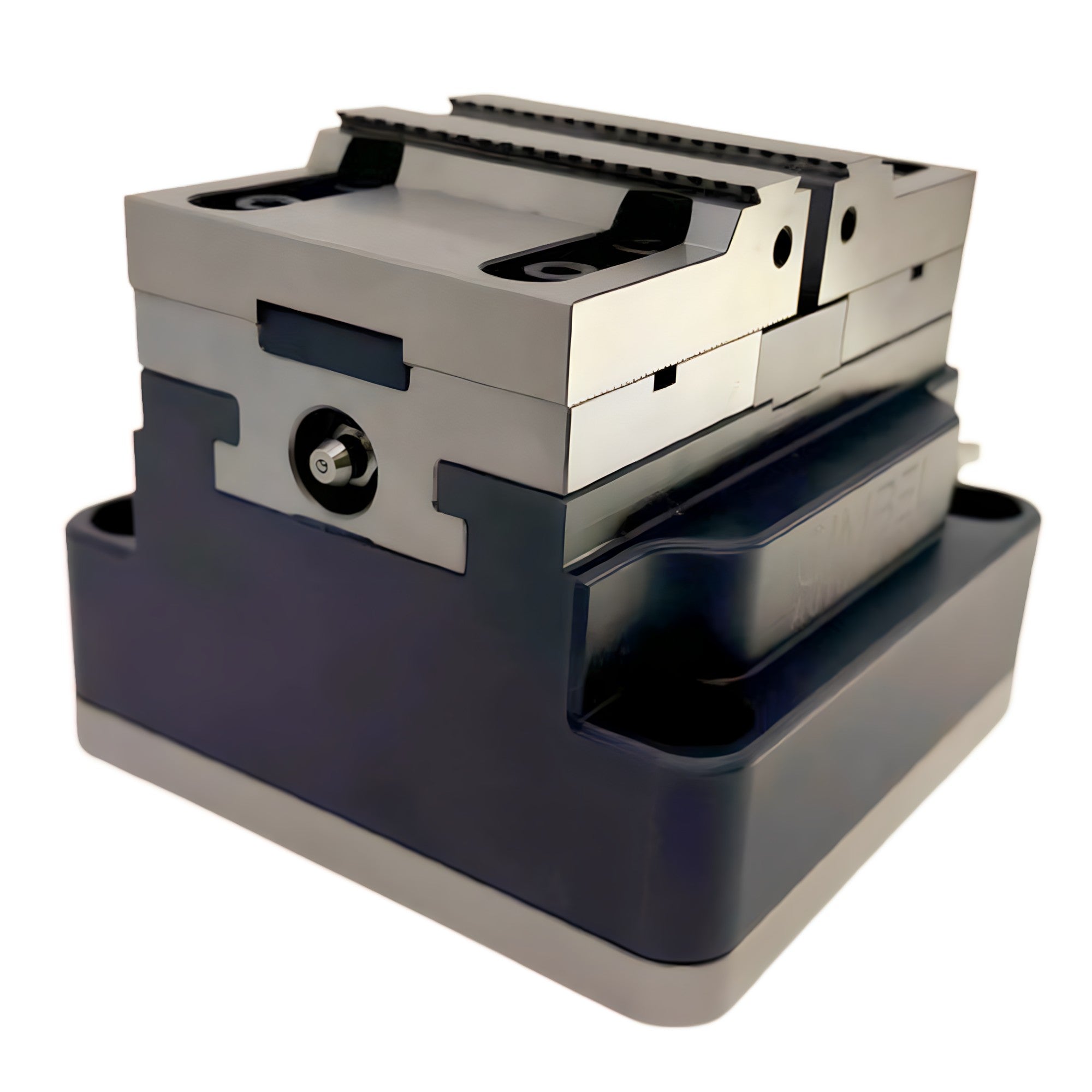
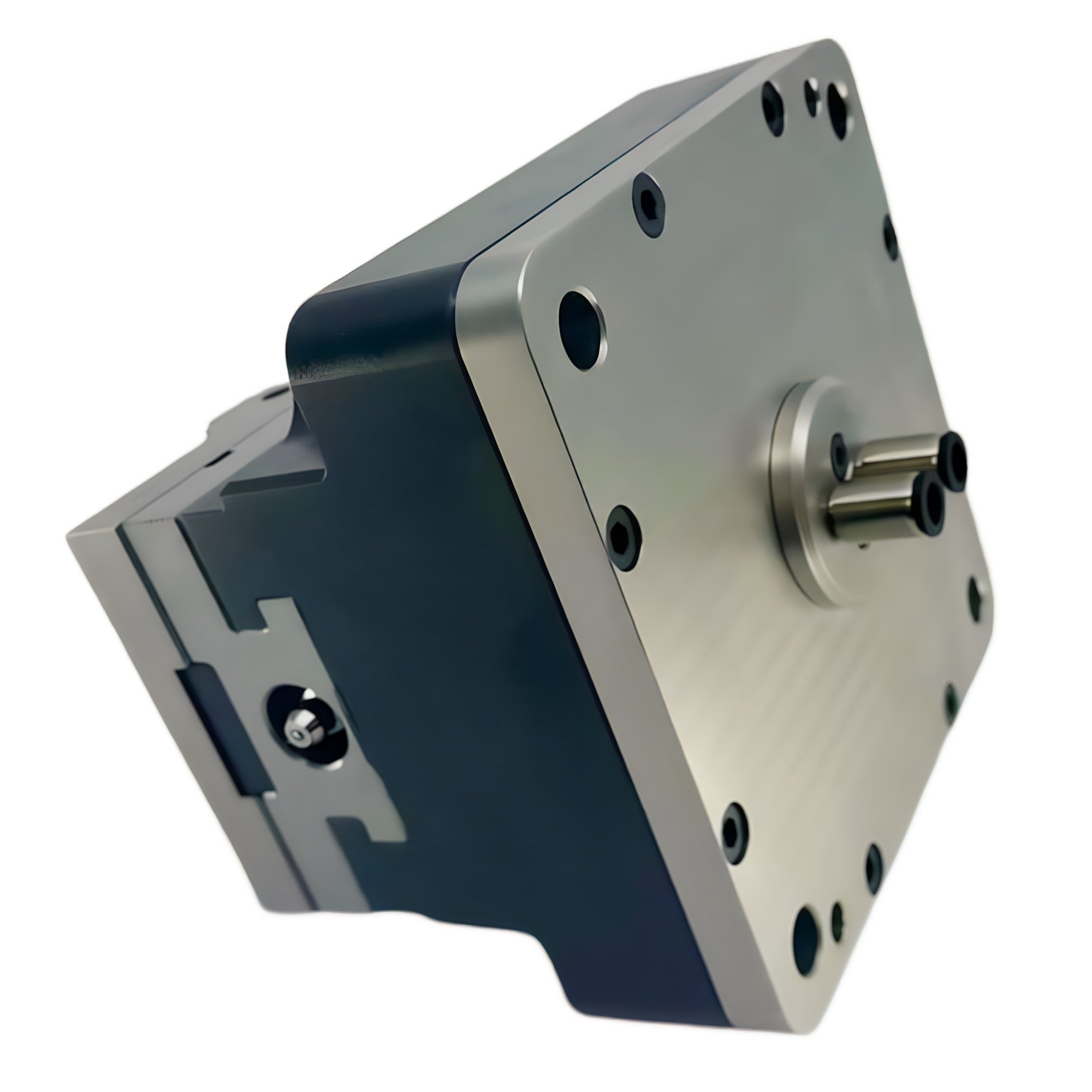


What a self-centering vise is
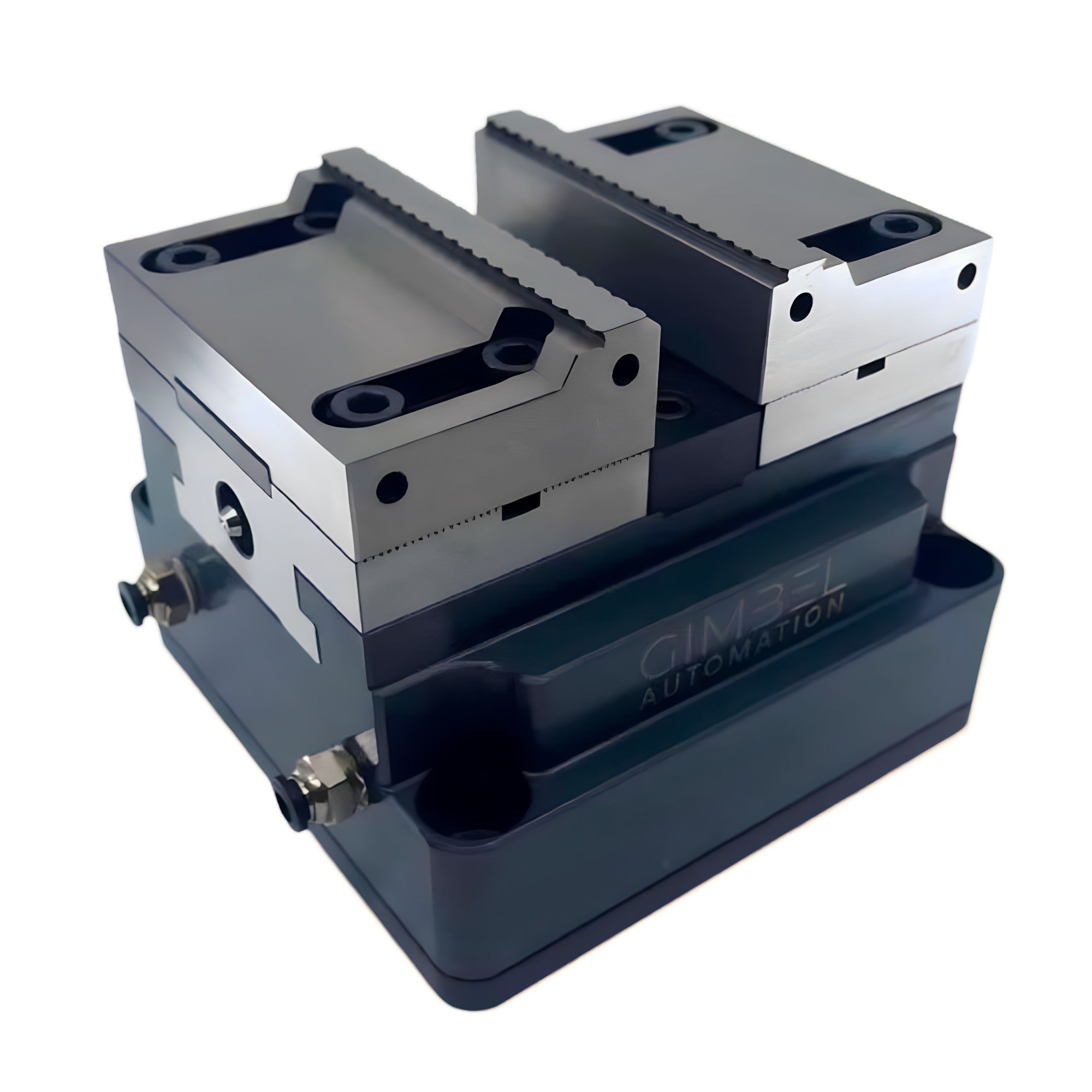
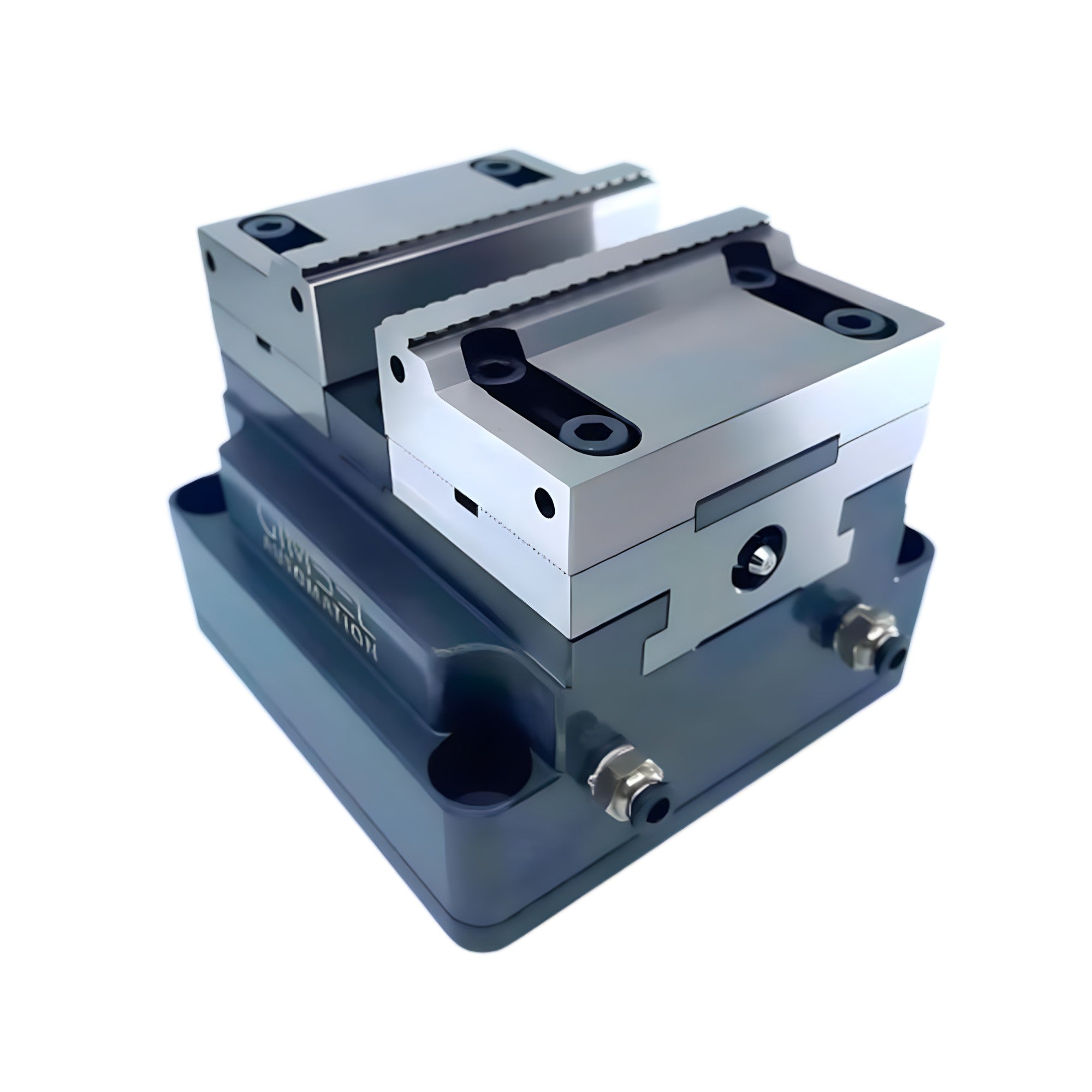
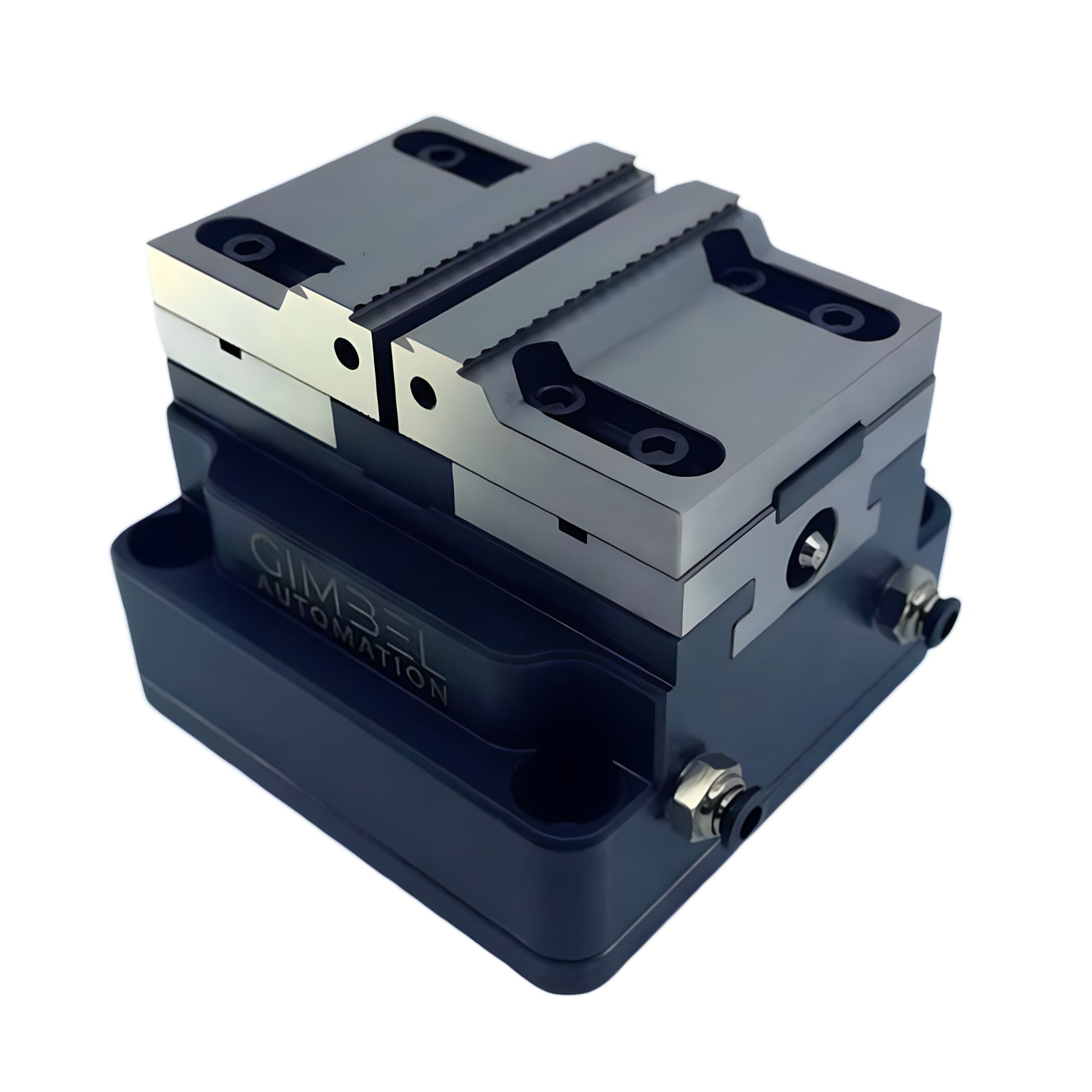
A self-centering vise holds your part dead center every time, without you ever touching a dial indicator. Both jaws move in together at the same speed, so the part always lands on the same centerline. A regular vise pushes the part sideways against one fixed jaw, which means your zero shifts whenever the stock size changes. Take that guesswork out and repeat jobs run faster, which is the whole reason shops make the switch.
How a self-centering vise works
It comes down to one clever screw. That screw has two sets of threads running in opposite directions, so the left half and the right half are cut backward from each other. One jaw sits on each half. Turn the screw, or push air behind it, and both jaws get pulled toward the middle at the same pace, squeezing the part evenly from both sides.
That opposite-thread setup is the whole self-centering vise mechanism. It works the same whether your part is thumb-sized or a foot wide.
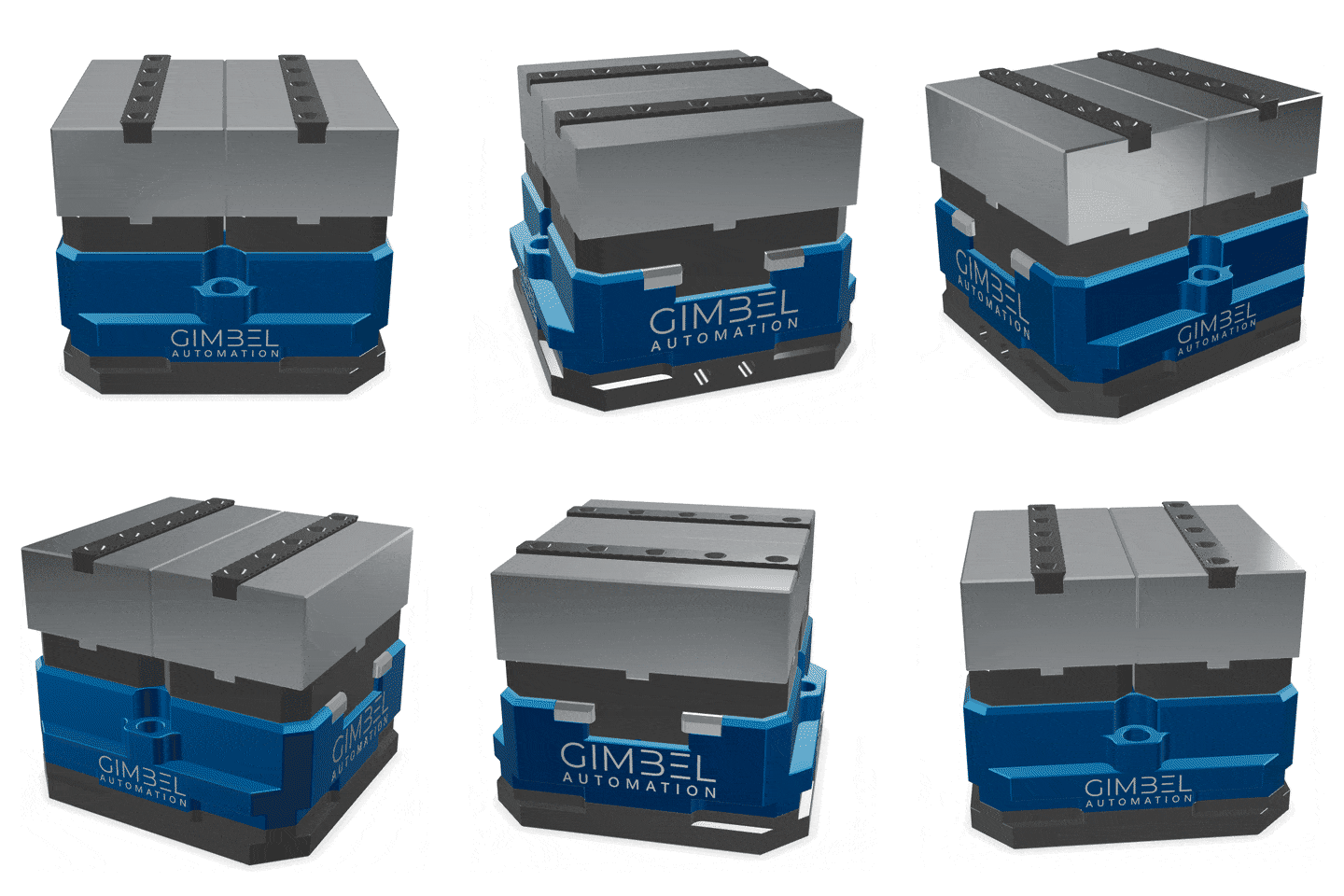
Manual, hydraulic, and pneumatic self-centering vises
Self-centering vises come in three drive types, and the drive is what decides how they fit your shift. A hand-cranked model works fine for one-off jobs, but every clamp needs a wrench and a bit of muscle. Hydraulic versions clamp with serious force, though they need a pump and separate lines plumbed in. A pneumatic self-centering vise runs on the shop air you already have, clamps in under a second, and fires straight from an M-code.
Here is the honest part. A good manual self-centering vise can hold tight tolerances too, so the real gap is speed and hands-off running, not how well it centers. The air version, also sold as an air vise, an automatic vise, or an automatic centering synchronous vise, wins by clamping in under a second with nobody at the machine.
Why pneumatic self-centering vises suit automation
Air changes what a vise can do inside a running cell. Our AutoVise closes on shop air from 40 to 175 PSI and holds up to 3,400 lbs of clamping force at 140 PSI. A built-in spring keeps the part clamped if pressure drops, so a lost line will not release your work. It fires from a standard M-code on Haas, Fanuc, Brother, Doosan, Hurco, and DMG Mori machines, loading and unloading without a robot arm.
Across a night shift, that is hours of spindle time reclaimed at 0.0008 inch repeatability, with nobody standing at the door. Compare the full pneumatic vise range for specs and downloads.
Not sure which drive type fits your parts? Tell us your machine and your run sizes, and we will point you to the vise that earns its spot on the table. No pressure to buy.
Self-centering vises for 4th and 5th axis machining
Rotary work adds a problem straight vises do not have: the air lines. On a trunnion or 4th axis, hoses routed over the top tangle as the platter turns. Our Rotary AutoVises route the air through the bottom, so the line runs up through the center of the rotary instead of draping over the top and tangling. For full 5-sided access, the AxisMount 90° Trunnion mounts the vise on its side and holds the part clamped through the swing.
That is how a self-centering vise keeps its centerline on a machine that never stops moving.
Choosing the right size for a Centering Vise
Size comes down to part envelope and table space, not clamp force alone. The 75mm suits small brackets, housings, and connectors, and its low profile clears tight tool envelopes. The 100mm is the one most shops order first, a 4 inch range that fits standard aluminum and steel production. The 150mm handles wider blanks and heavier steel, and the aluminum AutoVise Lite covers the same 6 inch range on a lighter budget.
Every AutoVise ships with hardened serrated jaws, with soft and hard jaw sets available for finished surfaces.
Common questions about self-centering vises
One screw inside the vise is cut with two opposite threads, right-hand on one half and left-hand on the other. Each jaw rides its own thread, so turning the screw or feeding it air drives both jaws the same distance toward the middle at once. That symmetry holds the centerline across the full clamp range.
A standard machine vise has one fixed jaw and one moving jaw, so the part drifts toward the fixed side as stock size changes. A self-centering vise moves both jaws equally, keeping the part on a set centerline no matter its width. You keep your datum and skip re-indicating, which saves real time on repeat runs.
Yes. A straight self-centering vise bolts to any 5-axis table and works normally. When the vise itself rotates on a trunnion or 4th axis, use a rotary model with bottom air pass-through so the line feeds through the bore instead of tangling on the platter. That keeps clamping steady through the full swing.
A pneumatic self-centering vise runs on standard shop air, usually 40 to 175 PSI. Clamping force scales with pressure, so you set force at the regulator on the clamp inlet. Our 100mm AutoVise delivers up to 3,400 lbs of clamping force at 140 PSI, which covers most aluminum and steel milling work.
Both spellings point to the same tool. American English uses vise, while British and Australian shops write vice, as in self-centring vice. You will also see machine vice, CNC vice, and automatic vice for the powered version. The mechanism does not change with the spelling, only the region does.